


Poort van de metro: Welk poorttype past bij jouw station, Doorvoervereiste, en Tariefbeschermingsbrief
2026-04-04


Voor een metrostation met veel volume, de juiste metropoort is een klep voor standaard kaarten en een brede paddelpoort voor ADA- en nooduitgangen. Flap barriers leveren 40–55 ppm per rijstrook; Brede gangpaddelpoorten sluiten de nooduitgang voor tariefontwijking die meer dan de helft van alle tariefprijzen in de meeste metrosystemen uitmaakt. Volgens NFPA 101 Life Safety Code, Elke poort op een aangewezen uitgangspad moet fail-safe openen bij brandalarm activeren of stroomuitval.
Deze gids geeft inkoopambtenaren aan de inkoopautoriteiten van de transitautoriteiten, Projectdirecteuren metro infrastructuur, Systeemintegratoren, en EPC-aannemers een poorttype-vergelijkingstabel op transit-specifieke criteria, Een sectie voor het matchen van stationscenario's, een piekuur-doorvoerformule, Transitticketing-integratiematrix, Vergelijking met handhaving van tariefontduikingen, ADA- en failsafe-eisen, en een direct pad naar een fabrieks-directe quote. Begin met de Ironman transitgate-reeks bij deDraaihekpoortoplossingen-hub.
Typen metropoortpoorten — Vergeleken op transitspecifieke criteria
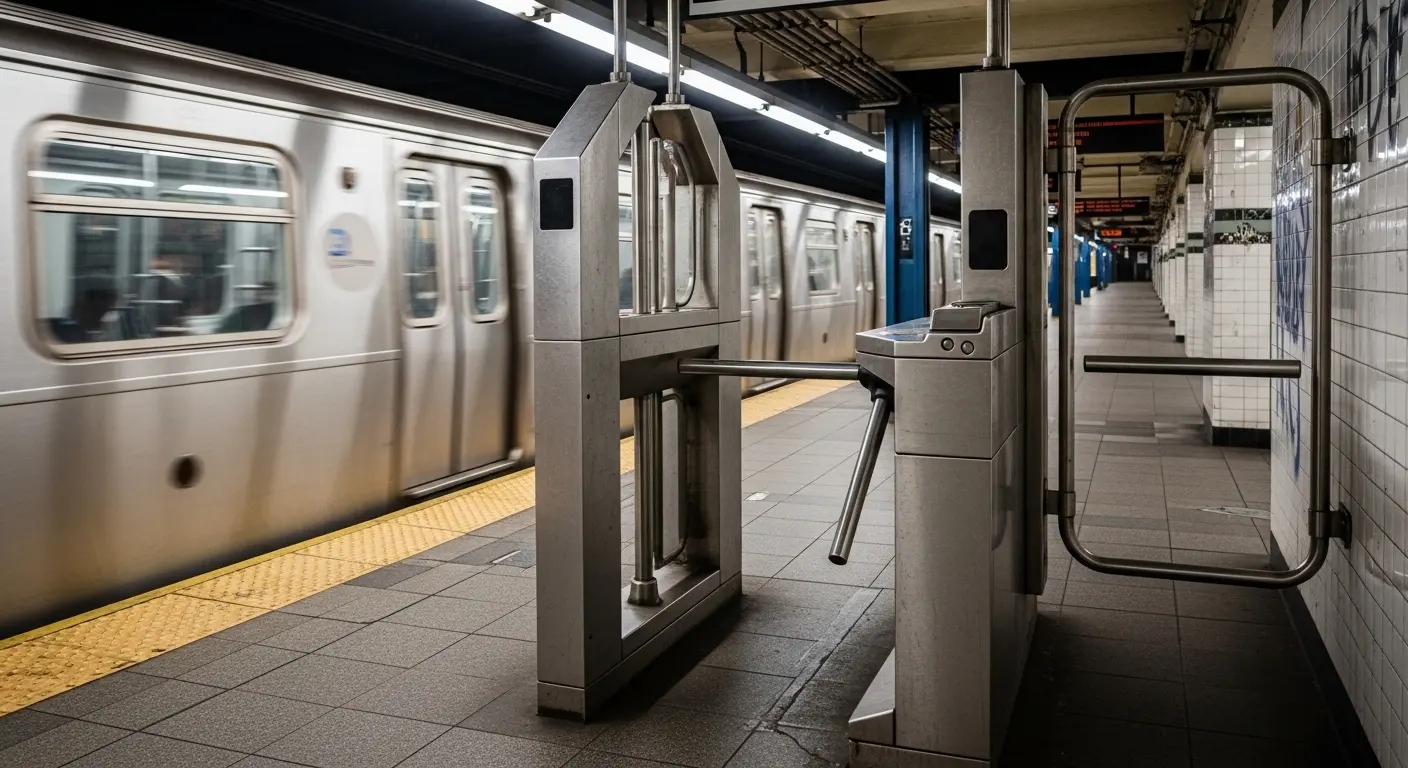
Vijf poorttypen dekken het volledige scala aan eisen van metrostations. Elke plek past bij een ander stationtype, doorvoerbelasting, en een briefing over de handhaving van de kaarten. De onderstaande tabel vergelijkt ze op basis van de criteria die van belang zijn voor een transitspecificatie.
| Poorttype | Doorvoer | Kaarthandhaving | ADA / Brede Gangbeuk | Ticketing | Vandalweerstand | Beste stationtype | Eenheidsbereik |
|---|---|---|---|---|---|---|---|
| Flap Barrière | 40–55 ppm | Hoog — sensor + alarm | Variant van brede rijstrook | RFID, QR, NFC, EMV | Hoog | Hoogvolumeplatform, Standaard wolproductie | $450–$3.000 |
| Breed-gangpad Paddle Gate | 30–45 ppm | Hoogste — volledige deursweep | Ingebouwde 48-inch | RFID, QR, NFC, EMV | Heel hoog | ADA-rijstrookje, Nooduitgangstrook, Hoofdingang | $1,200–$6.000 |
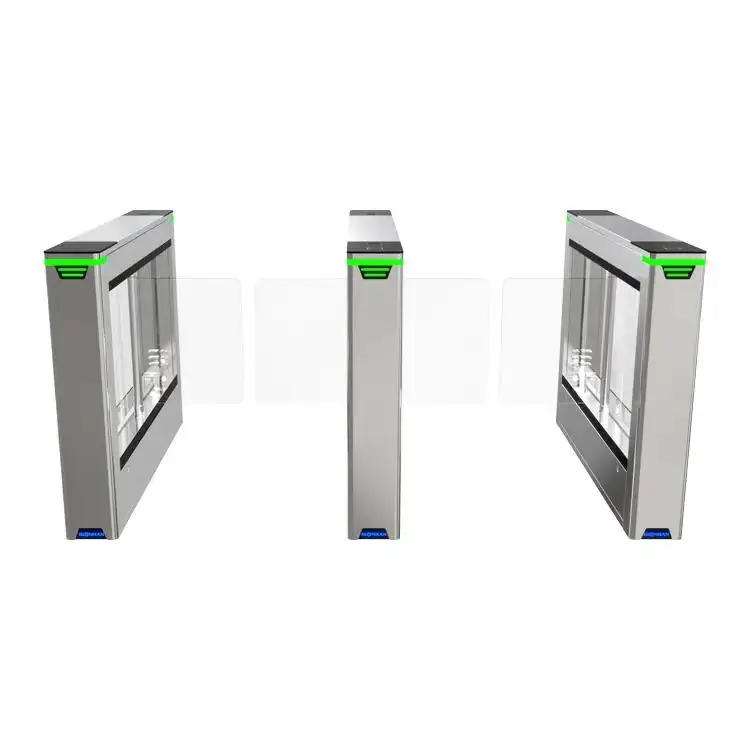
| Glazen Snelheidspoort | 50–80 ppm | Matig — sensoralarm | Variant van brede rijstrook | RFID, NFC, QR | Gematigd | Premium stationsmezzanine | $1,300–$8.000 |
| Draaideurje op volle hoogte | 15–20 ppm | Maximum — fysieke kooi | Aparte ADA-rijstrook vereist | RFID, biometrisch | Hoogst | Outdoor BRT, Onbemand secundaire ingang | $600–$4.000 |
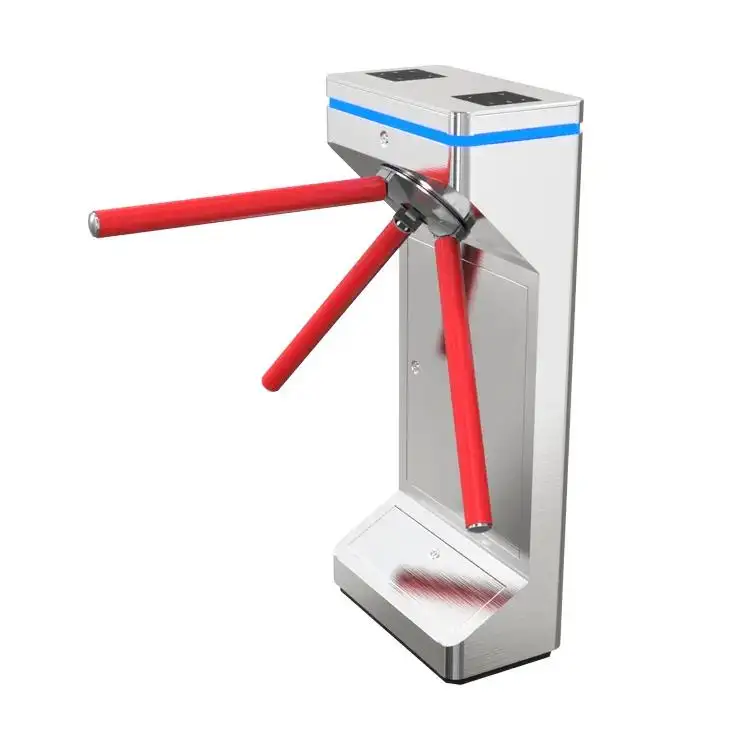
| Tripod Draaikruis | 25–50 ppm | Matig — mechanische arm | ADA-omleidingsstrook vereist | RFID, QR, barcode | Hoog | Budget-retrofit, Secundaire perroningang | $200–$1.200 |
Flapbarrière en brede gangpaddelpoort — standaard en ADA transittoegangspoorten
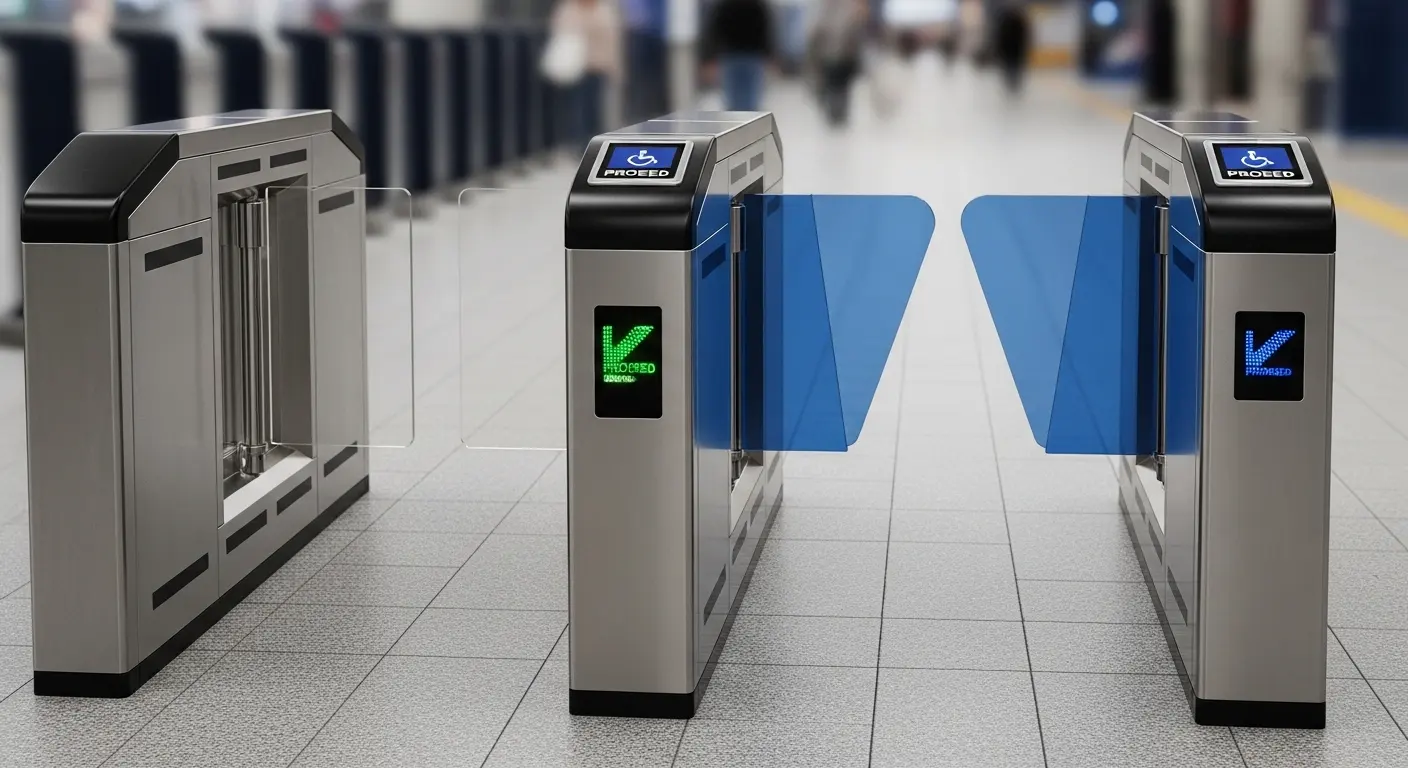
De klep is de standaard metropoort voor metroperrons met veel volume en standaard toegangspoorten. Met 40–55 ppm per rijstrook, Het behandelt de piekburst tijdens een treinverblijf zonder wachtrijvorming. De sensor-gebaseerde anti-tailgating activeert een alarm voordat een tweede persoon de passage kan voltooien — waarbij fysieke en elektronische kaartcontrole worden gecombineerd boven wat alleen een statiefarm kan leveren.
De brede gangpad peddelhek, ingezet door MTA New York bij 20 Stations vanaf het volgende 2024, voegt een volledige deursweepbarrière toe bij een gangpadbreedte van 48 inch. Dit lost de ADA-naleving op, Toegang tot kinderwagens en bagage, en het ontwijken van nooduitgangen — het grootste punt voor het omzeilen van kaartjes in de meeste metrosystemen — het grootste punt voor het omzeilen van kaarten.
Volledige hoogte en statief — Buiten- en budget-transitinzet
Draaipoorten op volledige hoogte zijn geschikt voor buiten, blootgestelde kaartzones — BRT-terminalperimeters, Onbemande secundaire metrostation-ingangen, en kaartbarrièreperimeters. Hun IP54–IP65 buitenclassificatie past bij de blootgestelde transitomgeving. Er moet een aparte ADA-rijstrook worden aangelegd waar draaipoorten op volle hoogte de primaire toegangsbarrière vormen. Voor de Ironman anti-tailgating configuratie die in deze posities wordt gebruikt, zie deanti-tailgating AB-draaihek pagina.
Driepoot-draaipoorten blijven de meest kosteneffectieve retrofit voor secundaire perroningangen en stations met een lager volume. Met $200–$1.200 per rijstrook en 25–50 ppm, ze bieden een mechanische tariefbarrière en RFID/QR-integratie tegen de laagste kapitaalkosten per rijstrook.
Metropoort Poort per Stationtype — Welke poort hoort waar
Het stationstype en de piekbelasting bepalen het poorttype — niet alleen de categorie van de transitlijn. Een grootbusperron en een secundaire ingang buiten de spits in hetzelfde systeem vereisen verschillende poortspecificaties.
| Station Type | Aanbevolen poort | Rijstroken | Geloofsbrief | Belangrijke vereiste |
|---|---|---|---|---|
| Metro met veel volume (>200 ppm) | Flapbarrière | 4–11 | RFID, QR, NFC | Maximale doorvoer, Kaarthandhaving, ADA-rijstrookje |
| Standaard metro (100–200 ppm) | Flapbarrière | 2–5 | RFID, QR | Doorvoer, Kaarthandhaving, ADA-rijstrookje |
| ADA / kinderwagen / Bagagebaan | Breed-gangpad peddelhek | 1–2 per bank | RFID, QR, NFC | 48-Inch vrij, ADA-naleving |
| Nooduitgangstrook | Breed-gangpad peddelhek + fouttolerant | 1–2 | Alarm failsafe openen | Sluit de afstand in het ontwijken van kaartjes bij de afritstrook |
| Secundair onderwijs / Ingang buiten de spitstijd | Tripod draaipoort | 1–2 | RFID, QR | Lage kosten, Tariefcontrole |
| Buitenterminal BRT | Draaihek op volle hoogte | 2–4 | RFID, biometrisch | IP65, maximale fysieke afschrikking |
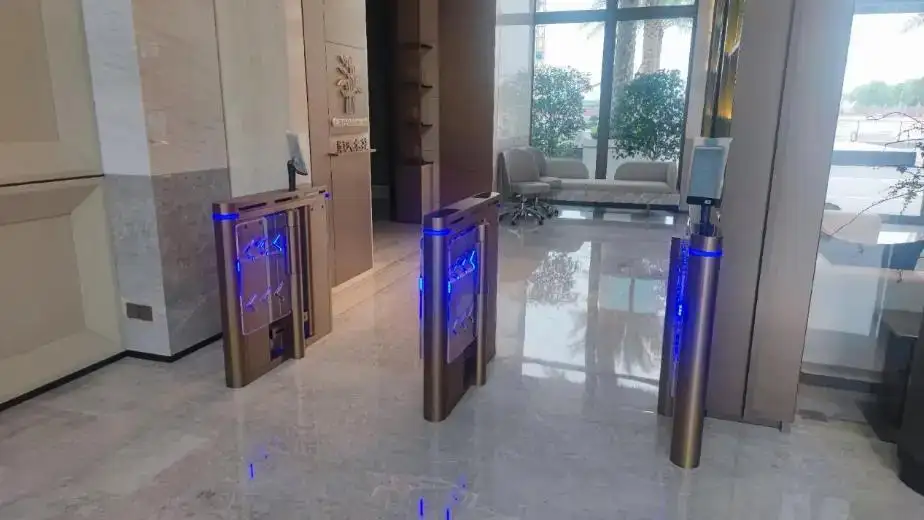
| Premium stationsmezzanine | Glazen snelheidspoort | 2–4 | RFID, NFC, QR | Hoge doorvoer, Stationsesthetiek |
Hoogvolume- en standaard metroperrons
Metroperrons met hoog volume hebben een minimale doorvoersnelheid van de poortbank nodig 200 Passagiers per minuut over de volledige toegangspoort. Met 40–55 ppm per flap barrièrebaan, Een rijbaan van 4–5 rijstroken dekt deze vereiste, met één rijstrook in reserve voor onderhoudsperiodes. Gebaseerd op onze analyse van de implementatie van de transitpoorten, De meest voorkomende doorvoerfout bij metropoortinstallaties is het dimensioneren van het gemiddelde uurtarief in plaats van de piek-uitbarsting tijdens het verblijf — waarbij 80–150 passagiers in een venster van 60–90 seconden worden geconcentreerd.
Standaard metroperrons met een capaciteit van 100–200 ppm hebben 2–4 klepberiklen plus één ADA-brede gangpad nodig. De ADA-rijstrook moet in dezelfde gatebank liggen als de standaardrijstroken — niet op een aparte locatie. Voor de Ironman flap barrière-draaikruis die wordt gebruikt bij het inzetten van transitperrons, zie deFlap Barrière draaikruispagina.
ADA, Nooduitgang, en secundaire ingangsscenario's
De ADA / kinderwagen / bagagerijstrookje is verplicht bij elke metropoortbank in de VS. onder ADA-normen voor toegankelijk ontwerp. De minimale heldere breedte is 32 maar de voorkeursspecificatie voor openbaar vervoer is 48 inches of breder, die overeenkomt met de MTA- en LA Metro-standaard brede gangpoorten. Voor de Ironman glazen schuifpoortconfiguratie die wordt gebruikt in premium stationomgevingen, zie dePagina over glazen schuifpoort.
Secundaire en buiten de piekuur ingangen vertegenwoordigen de laagste voetgangerspoortposities in een metrosysteem. Op deze posities, een statief van $200–$1.200 per rijstrook levert RFID/QR-tariefhandhaving tegen de laagste kapitaalkosten. Combineer het met één ADA-omleidingstrook — ofwel een brede paddelpoort of een bemande handmatige override-rij — om aan de toegankelijkheidseisen te voldoen..
Handhaving van de Metropoort Voor Tariefontwijking — Wat de poort moet doen
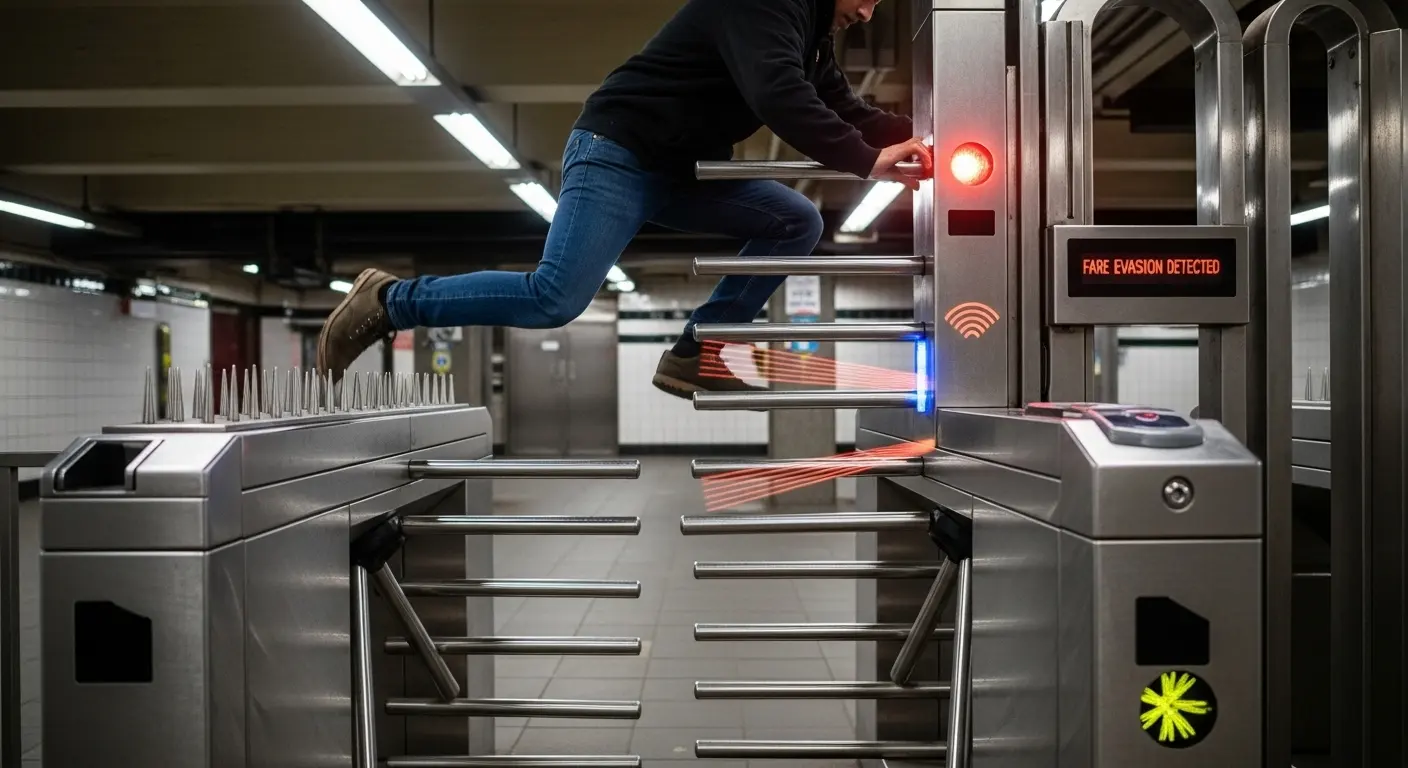
De primaire functie van een poort van een metropoort is bescherming van kaartinkomsten — het voorkomen van ongeoorloofde toegang voordat deze plaatsvindt. Volgens MTA-gegevens, Meer dan de helft van alle metrotariefontduikingen vindt plaats via nooduitgangen, niet via de standaard toegangspoorten.
Handhaving van kaartontwijking per poorttype
| Poorttype | Bypass-methode | Handhavingsniveau | Inkomstenterugvordering |
|---|---|---|---|
| Breed-gangpad peddelhek | Volledige deursweep — geen opening | Hoogst | Maximum |
| Flapbarrière | Sensor + alarm | Hoog | Sterk |
| Draaihek op volle hoogte | Fysieke kooi | Hoog | Sterk |
| Tripod draaipoort | Mechanische arm | Gematigd | Gematigd |
| Traditionele nooduitgang | Duwbeugel — geen barrière | Geen | Nul |
Drie handhavingsgaten die elke metropoortupgrade moet sluiten
Nooduitgangen: Het vervangen van standaard nooduitgangen met push-bar door ADA-peddelpoorten met brede gangpadden verwijdert het grootste punt voor het ontwijken van kaarten in de meeste vervoerssystemen. Volgens MTA-gegevens, Deze ene wijziging levert meer terugwinning op kaartinkomsten dan het vervangen van hetzelfde aantal standaard tripod-rijstrookpoorten.
Overspringgaten: Standaard klepbarrières met een 900 De hoogte van het mm-paneel ontmoedigt de meeste overspringpogingen. Draaipoorten op volle hoogte bij standaard rijstroken elimineren jump-over volledig voor risicovollere posities.
Anti-tailgating sensor kalibratie: Transit-volume anti-tailgating sensoren moeten worden gekalibreerd voor het close-contact wachtrijpatroon van een metroperron. Gebaseerd op onze ervaring met transit-implementaties, Standaard voetgangerskalibratie levert valse alarmpercentages boven 15% tijdens de spitsuren bij drukke metrostations — waardoor de operators de gevoeligheid verlagen of het alarm uitschakelen. Specificeer transit-gekalibreerde gevoeligheid op het orderpunt. BART's $90 Miljoen poortvervangingscontract — ongeveer vervanging 715 poorten met moeilijker te omzeilen alternatieven door 2026 — weerspiegelt de omvang van de investeringen die vervoersautoriteiten toezeggen aan het terugvorderen van de kaartinkomsten.
Planning van de doorvoersnelheid tijdens de spitsuren voor poorten van de metro
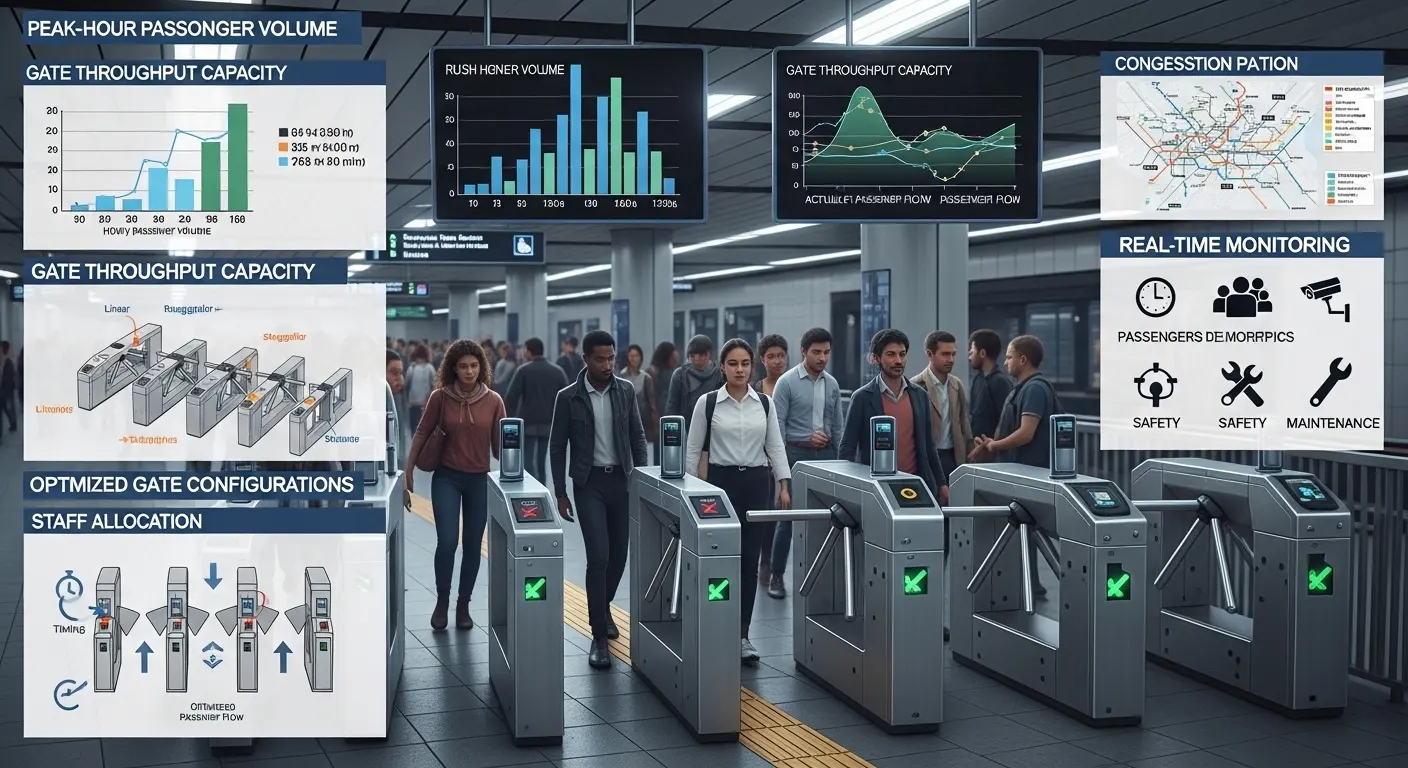
Het te weinig specificeren van rijstrookaantallen is de duurste specificatiefout bij de metropoort — een doorvoerbottleneck tijdens piekuren zorgt voor vertraging in passagiers, Zorgt voor platformdrukte, en zet veiligheidsinterventies in gang.
Subway Peak Throughput Formula — Train Dwell Event Methode:
Rijstroken = Passagiers per trein ÷ verblijfsvenster (Seconden) × 60 ÷ Gate ppm
Voorbeeld 1 — Metroperron met veel volume, 800-Passagierstrein, 90-Tweede verblijf, flap barrière bij 50 ppm:
800 ÷ 90 × 60 = 533 Inzendingen per minuut. 533 ÷ 50 = 10.7 Rijstroken →11 Minimum klepbarrièrebanen voor het platform.
Voorbeeld 2 — Standaard metro, 300-Passagierstrein, 90-Tweede verblijf, Tripod bij 35 ppm:
300 ÷ 90 × 60 = 200 Inzendingen per minuut. 200 ÷ 35 = 5.7 Rijstroken →6 Minimum aantal statiefbanen.
| Station Load | Treincapaciteit | Woon | Poorttype | Rijstroken |
|---|---|---|---|---|
| Lightrail (200 Pax) | 200 | 90 seconde | Flapbarrière | 4–5 |
| Standaard metro (500 Pax) | 500 | 90 seconde | Flapbarrière | 7–8 |
| Metro met veel volume (800 Pax) | 800 | 90 seconde | Flapbarrière | 10–11 |
| BRT-terminal (variabele) | Variabele | 120 seconde | Driepoot | 4–6 |
Grootte voor de dwell-evenementpiek. Een station dat gemiddeld wordt 5,000 Passagiers per uur kunnen ervaren 300 gelijktijdige gate-ingangen in een verblijfsvenster van 90 seconden. Het gemiddelde uurtarief als doorvoerbasis onderspecificeert consequent het aantal rijstroken voor grootschalige vervoerstoepassingen.
Transitticketing-integratie voor metropoorten
Ticketingsysteemintegratie moet worden bevestigd in de specificatiefase — niet als een configuratie na de installatie.. Elk ticketingprotocol vereist specifieke lezerhardware die in de gate-eenheid is ingebouwd.
| Ticketingbevoegdheid | Protocol | Poortlezer-hardware | Compatibele poorttypes |
|---|---|---|---|
| Contactloze EMV / RFID-transitkaart | ISO 14443 | 13.56 MHz RFID-lezer | Flapbarrière, Peddelpoort, Snelheidspoort, driepoot |
| QR e-ticket (mobiel of gedrukt) | TCP/IP | 2D barcodescanner | Flapbarrière, Peddelpoort, Snelheidspoort, driepoot |
| NFC mobiele betaling | ISO 18092 / HCE | NFC-lezer | Flapbarrière, Peddelpoort, Snelheidspoort |
| Gezichtsherkenning | TCP/IP | IP-cameramodule | Flapbarrière, Snelheidspoort, Peddelpoort |
| Legacy magneetstrip | RS232 | Magnetische veeglezer | Driepoot (Alleen legacy-systemen) |
Gebaseerd op onze ervaring met het uitrollen van transitpoorten, de meest voorkomende specificatiekloof in ticketing is het ontbreken van een dual-reader configuratie — een contactloze RFID-lezer en een QR-scanner in dezelfde gate-unit. Dit geldt zowel voor bestaande gebruikers van de OV-kaart als voor gebruikers van mobiele apps met e-ticket vanaf één gate-positie. Voor de Ironman flap draaihekpoort met multi-credential lezerconfiguratie, zie deProductpagina van de klep draaihek.
ADA- en failsafe-eisen voor metropoorten
ADA-naleving en NFPA 101 Fail-safe uitgang zijn verplichte vereisten voor elke opening van een metropoort — geen optionele toevoegingen.
ADA Vereisten voor brede gangpaden
Volgens ADA-normen voor toegankelijk ontwerp (VS. Toegangsbord), Elke metrokaartenbank moet ten minste één toegankelijke gangpad hebben met een minimale doorzichtigheid van 32 inch. De voorkeursspecificatie voor modern openbaar vervoer is 48 inches of breder — passend bij de MTA New York en LA Metro brede gangpadstandaard. Voor internationale metrosystemen, ISO 21542 vereist een minimum 900 Mm (Ongeveer 36 Inch) toegankelijke toegangspoort gangpad.
NFPA 101 Fail-safe uitgang
Volgens NFPA 101 Life Safety Code, Elke poort van de metro op een aangewezen nooduitgang moet terugtrekken naar de open positie binnen 3 seconden na brandalarm activeren of netstroomverlies — en blijven open gedurende de duur van de noodsituatie. De failsafe-trigger moet direct via droogcontact-ingang op het brandalarmbedieningspaneel worden aangesloten. Een softwarecommando dat onderhevig is aan netwerkvertraging voldoet niet aan deze eis. Voor de Ironman schuifpoort met failsafe nooduitgang, zie dePagina met schuifpoort.
Een fabrieks-directe offerte krijgen voor uw metropoort
Vier items zijn voldoende voor een volledige fabrieks-directe gespecificeerde offerte binnen 12 Openingstijden.
- Definieer je stationtype en belasting: Metro met hoog volume / Standaard metro / BRT-terminal / Secundaire ingang + treincapaciteit en woonvenster in enkele seconden
- Bereken je rijstrookaantal: Pas de dwell-gebeurtenisformule toe — passagiers per trein ÷ verblijfsseconden × 60 ÷ gate ppm = rijstroken; voeg per poortbank één ADA-brede gangstrook toe
- Bevestig de ticketingintegratie: contactloze EMV RFID / QR e-ticket / NFC mobiele betaling — bevestig het ticketprotocol van de vervoersautoriteit en de benodigde lezerhardware bij het bestelpunt
- Dien je transitbrief in: Bezoek de Voetgangerssnelheidshek pagina of de Draaipoortnaaf voor een fabrieks-directe transitgate-offerte binnen 12 Openingstijden, met CE, ISO9001, FCC, en RoHS-certificeringsdocumentatie inbegrepen
Veelgestelde vragen
Q1: Welk type draaipoort is het beste voor een metrostation.?
Voor een metroperron met veel volume, Een flap barrier is de beste metropoort voor standaardrijstroken — 40–55 ppm per rijstrook, sensor-gebaseerde anti-tailgating, en contactloze RFID/QR/NFC-ticketingintegratie. Een brede paddelpoort is de juiste specificatie voor de ADA-rijstrook en nooduitgangstrook — het sluit de kloof in de nooduitgang die meer dan de helft van alle tariefbehalen in het openbaar vervoer bij de meeste systemen uitmaakt. Een driepoot-draaipoort is geschikt voor secundaire en buiten de pieken ingangen voor $200–$1.200 per rijstrook — en biedt mechanische kaarthandhaving en RFID/QR-integratie tegen de laagste kapitaalkosten. Draaipoorten op volle hoogte zijn geschikt voor buitenperimeters van BRT-terminals en onbemande secundaire ingangen, waarbij maximale fysieke afschrikking de primaire opdracht is.
Q2: Hoe voorkomt een poort van een metropoort kaartontduiking?
Een metropoort voorkomt kaartontwijking via drie mechanismen: een fysieke barrière die de doorgang blokkeert totdat een geldig bewijs wordt getoond (Flappaneel, paddle door, kooi op volle hoogte, of statiefarm), een sensor-gebaseerd anti-tailgating-systeem dat een tweede persoon binnenkomt voordat de poort wordt gereset, en een alarm activeert, en een tariefintegratie die het inloggegevens in realtime valideert aan de hand van de ticketdatabase van de vervoersautoriteit voordat de gate opengaat. Volgens MTA-gegevens, meer dan de helft van alle metro-tariefontduikingen vindt plaats via nooduitgangen — het vervangen van deze poorten door ADA-brede gangpaden met fail-safe uitgang is de meest impactvolle enkele interventie voor het terugvorderen van kaartinkomsten bij de meeste vervoerssystemen.
V3: Welke doorvoer moet een metropoort aankunnen??
Gebruik de dwell-event formule: Passagiers per trein ÷ woonvenster (Seconden) × 60 ÷ gate ppm = rijstroken. Voor een metrotrein met veel volume van 800 passagiers met een 90-seconden pauze en een klep op 50 ppm, Het minimale aantal rijstroken is 11 Rijstroken voor dat perron. Voor een standaard metrotrein met 300 passagiers en een statief bij 35 ppm, het minimum is 6 Rijstroken. Grootte voor de piek tijdens het woonevenement — niet het gemiddelde uurtarief voor inschrijfgeld. Een station dat gemiddeld wordt 5,000 Passagiers per uur kunnen ervaren 300 gelijktijdige poorttoegang binnen een venster van 90 seconden. Gemiddelde tariefgroottes specificeren consequent het aantal rijstroken voor grootvervoersuitzendingen met veel vervoersvolume te weinig.
Q4: Hoe integreert een metropoort met contactloze ticketing??
Een metropoort met draaipoort integreert met contactloze ticketing via specifieke lezerhardware die in de gate-eenheid is ingebouwd: een 13.56 MHz ISO 14443 contactloze RFID-lezer voor transitkaarten en EMV-bankkaarten, een 2D-barcodescanner voor QR-e-tickets via mobiele apps of geprinte tickets, en een ISO 18092 NFC-lezer voor mobiel betalen. De meeste vervoersautoriteiten vereisen nu dual-reader configuratie — contactloze RFID plus QR-scanner — zodat één gate-rijstrook zowel het aftappen van transitkaarten als e-ticket scannen dekt zonder aparte rijstroken. Legacy magneetstripsystemen gebruiken een RS232 magnetische swipe-lezer, Maar deze worden in de meeste vervoerssystemen uitgefaseerd door 2026. Bevestig de vereiste ticketingprotocollen van de vervoersautoriteit in de specificatiefase.
V5: Wat zijn de ADA-vereisten voor een metrokaartpoort?
Volgens ADA-normen voor toegankelijk ontwerp (VS. Toegangsbord), Elke metrokaartenbank moet minstens één toegankelijke gangpad hebben met minimaal 32 inch (812 Mm) vrije breedte. Voor nieuwbouw en grote aanpassingen, De voorkeurstransitspecificatie is 48 inches of breder — dit is de standaard die door MTA New York en LA Metro wordt aangenomen voor hun brede gangpaden voor het upgraden van de toegangspoort. Voor internationale metro-implementaties, ISO 21542 vereist een minimum 900 MM toegankelijke gangpad. De ADA-rijstrook moet deel uitmaken van dezelfde kaartenbank — niet op een aparte locatie op het perron. Een brede paddelpoort is de standaard hardwareoplossing voor deze eis, omdat het ook de nooduitgang voor tariefontwijking in dezelfde installatie sluit.
V6: Wat is de failsafe-eis voor een metropoort?
Volgens NFPA 101 Life Safety Code, Elke metropoort die op een aangewezen nooduitgangspad is geïnstalleerd, moet volledig open worden ingetrokken naar de volledig open positie binnen 3 seconden na brandalarm activeren of netstroomverlies — en blijven open gedurende de duur van het noodgeval. De failsafe-trigger moet direct via een droogcontact-ingang op het brandalarmbedieningspaneel worden aangesloten. Een softwaregebaseerd failsafe-commando is niet compliant — het is onderhevig aan netwerkvertraging en kan niet worden vertrouwd tijdens een brandnoodsituatie. Bovendien, Een handmatige override met één actie moet te allen tijde vanaf beide zijden van de poort toegankelijk zijn. Bevestig de integratie van brandpanelen en de reactietijd van failsafe in de specificatiefase — vóór goedkeuring van de inrichting.
