


Poort van het ziekenhuis: Welk hektype past bij elke ziekenhuiszone, Infectiebeheersingsstandaard, en Compliance Eis
2026-04-04


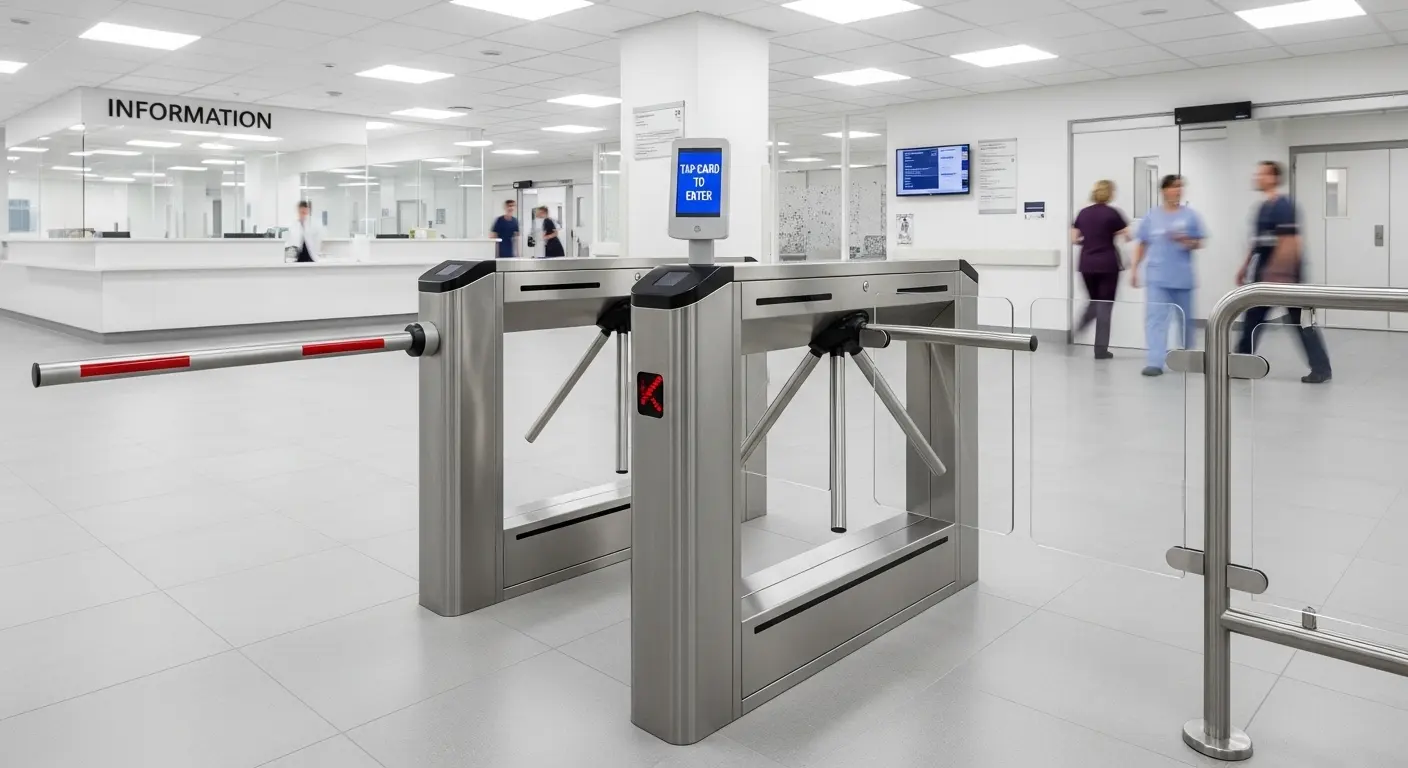
Voor de hoofdhal van een ziekenhuis, De juiste ziekhuispoort is een glazen klep of snelheidspoort — 40–60 ppm doorvoer, Een open, niet-intimiderend uiterlijk voor patiënten, en contactloze inloggegevenscompatibiliteit voor infectiepreventie. Elke ziekenhuispoort met een uitgangspad moet fail-safe open zijn volgens NFPA 101 Life Safety Code. Toegang voor ziekenhuisbezoekers moet een tijdstempel voor een auditspoor registreren om te voldoen aan de HIPAA- en Joint Commission-accreditatievereisten.
Deze drie vereisten — patiëntervaring, Infectiepreventie, en naleving — bepaal de specificatie voor elke ziekenhuispoort, ongeacht de zone. Deze gids geeft faciliteitsmanagers van het ziekenhuis, Directeuren gezondheidszorgbeveiliging, Estates-ambtenaren, en EPC-aannemers een poorttype-vergelijkingstabel op basis van zorgspecifieke criteria, een zone-voor-zone scenario-matching sectie, een infectiepreventie-credentialmatrix, HIPAA/Joint Commission-naleving context, en NFPA 101 Failsafe-eisen. Begin met het volledige Ironman-zorgconfiguratie-aanbod bij deDraaipoort voor ziekenhuizen pagina.
Typen poorten voor ziekenhuisdraaipoorten — Vergeleken op gezondheidszorgspecifieke criteria
Vier poorttypen dekken de ziekenhuistoegangsvereisten in het volledige scala aan zones. Elk past bij een andere klinische context en compliance-briefing. De onderstaande tabel vergelijkt ze op basis van de criteria die van belang zijn voor een ziekenhuisspecificatie.
| Poorttype | Doorvoer | Patiëntervaring | Infectiepreventie | Fouttolerant | Beste Ziekenhuiszone | Eenheidsbereik |
|---|---|---|---|---|---|---|
| Glasklep Barrière | 40–60 ppm | Hoog — open, verwelkoming | Touchless RFID of face recognition | Ja (Geconfigureerd) | Hoofdhal, Poliklinische ontvangst | $450–$3.000 |
| Snelheidspoort | 50–80 ppm | Hoogste — open zichtlijn | Aanraking — gezicht, NFC, QR | Ja (Geconfigureerd) | Groot ziekenhuisatrium | $1,300–$8.000 |
| Biometrische Swingbarrière | 20–35 ppm | Matig — ADA brede rijstrook | Touchless biometrie | Ja | Wijkcorridor, IC-ingang | $600–$3.500 |
| Anti-tailgating op volle hoogte | 15–20 ppm | Laag — niet patiëntgericht | RFID of biometrisch | Ja (Geconfigureerd) | Farmacie, Beperkt laboratorium | $600–$4.000 |
Glasklep en snelheidspoort — ziekenhuisingangen met de voorkeur voor patiënten
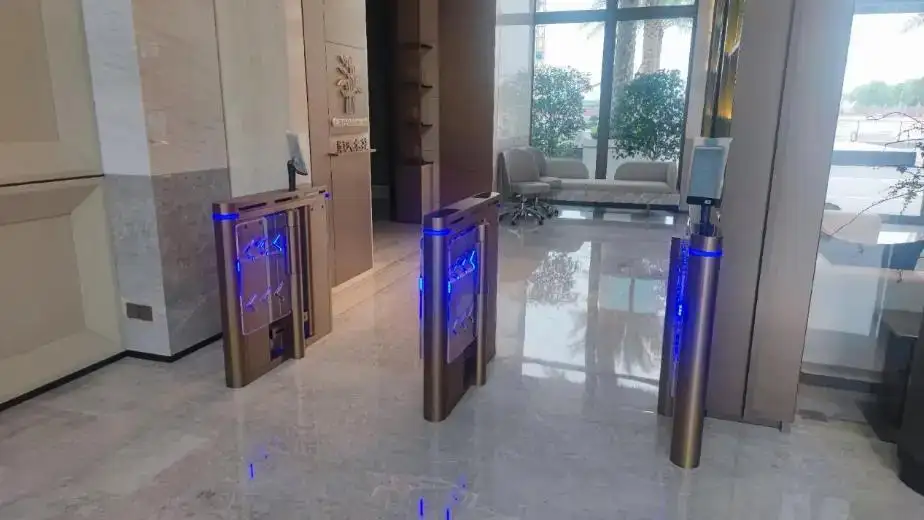
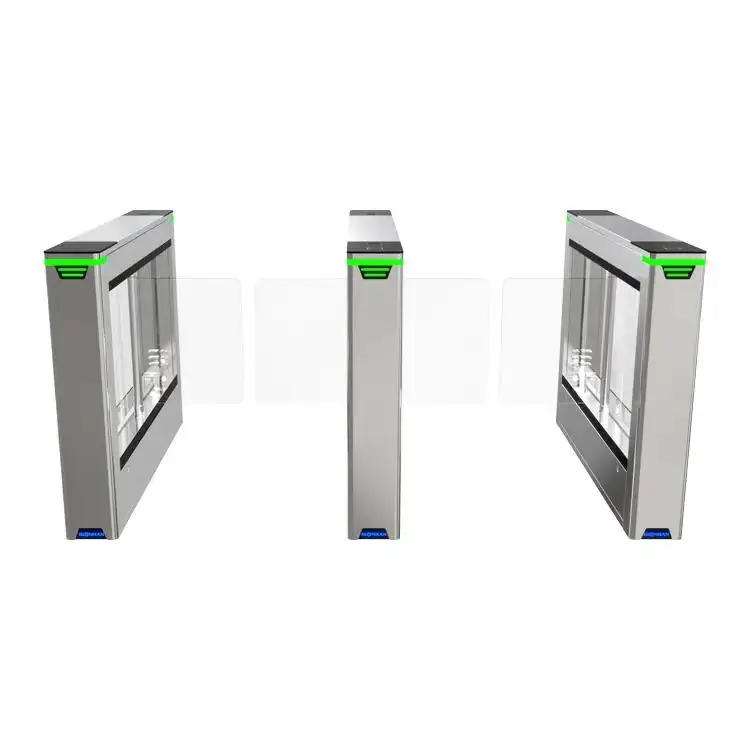
Voor de hoofdhal van een ziekenhuis of poliklinische ontvangst, Een glazen klepbarrière is de standaard specificatie voor een ziekenhuispoort. Het transparante glazen paneel creëert een open zichtlijn bij de ingang. Dit vermindert de angst van patiënten en zorgt voor een gastvrije uitstraling terwijl de toegang wordt gecontroleerd. Volgens gepubliceerde literatuur over zorgbeveiliging, Glazen draaipoorten met open zichtlijnen zorgen aanzienlijk minder patiëntenangst bij ziekenhuisingangen vergeleken met mechanische of alternatieven op volle hoogte.
Snelheidspoorten van 50–80 ppm passen bij grote ziekenhuisatria en de hoofdingangen van het opleidingsziekenhuis. Ze zijn de juiste specificatie waarbij ploegenwisseldoorvoer of pieken tijdens bezoekuren de primaire operationele bottleneck vormen. Voor de Ironman-ziekenhuis-snelheidspoort, zie deCasestudy van ziekenhuissnelheidspoort.
Biometrische schommelbarrière en volledige hoogte — Ingangen van de Ward en Restricted Zones
Biometrische swingbarrières met een brede ADA-baan (900–1.200 mm) Pakafdelingsgangen, IC-ingangen, en toegangspunten op de kraamafdeling. De brede rijstrook biedt plaats aan een rolstoel, een medicijnkarretje, of een IV-standaard zonder een aparte handmatige override-rijstrook. Voor de Ironman biometrische swingconfiguratie, zie debiometrische anti-klim draaideuren draaideuren.
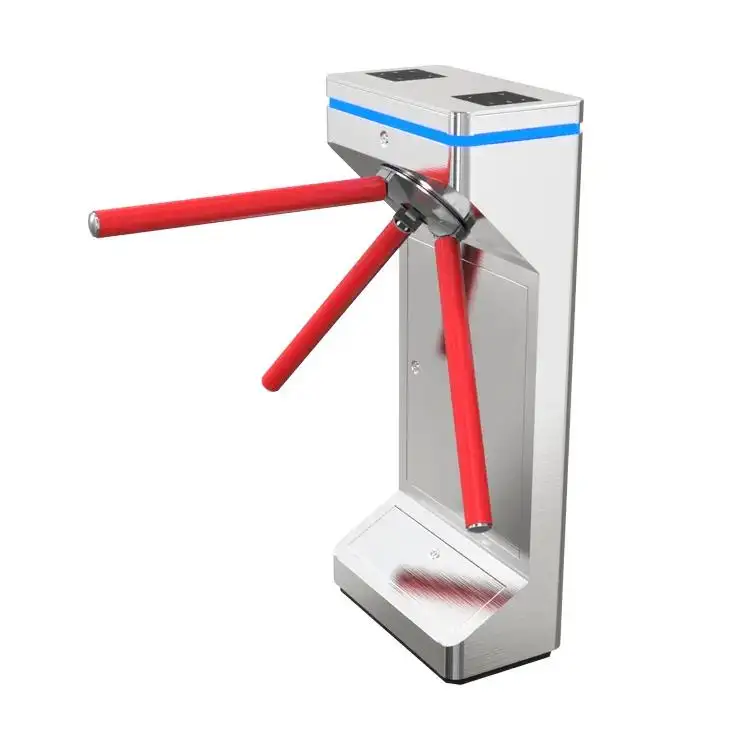
Anti-tailgating draaihekken op volle hoogte horen alleen in verboden ziekenhuiszones — apotheekapotheken, Beperkte laboratoria, en winkels met hoogwaardige medische apparatuur. Hun fysieke kooiprofiel en lagere doorvoer maken ze ongeschikt voor elke patiëntgerichte zone. Specificeer ze alleen waar alleen personeelsperimetercontrole de primaire opdracht is.
Ziekenhuisdraaipoort per zone — welke poort hoort waar
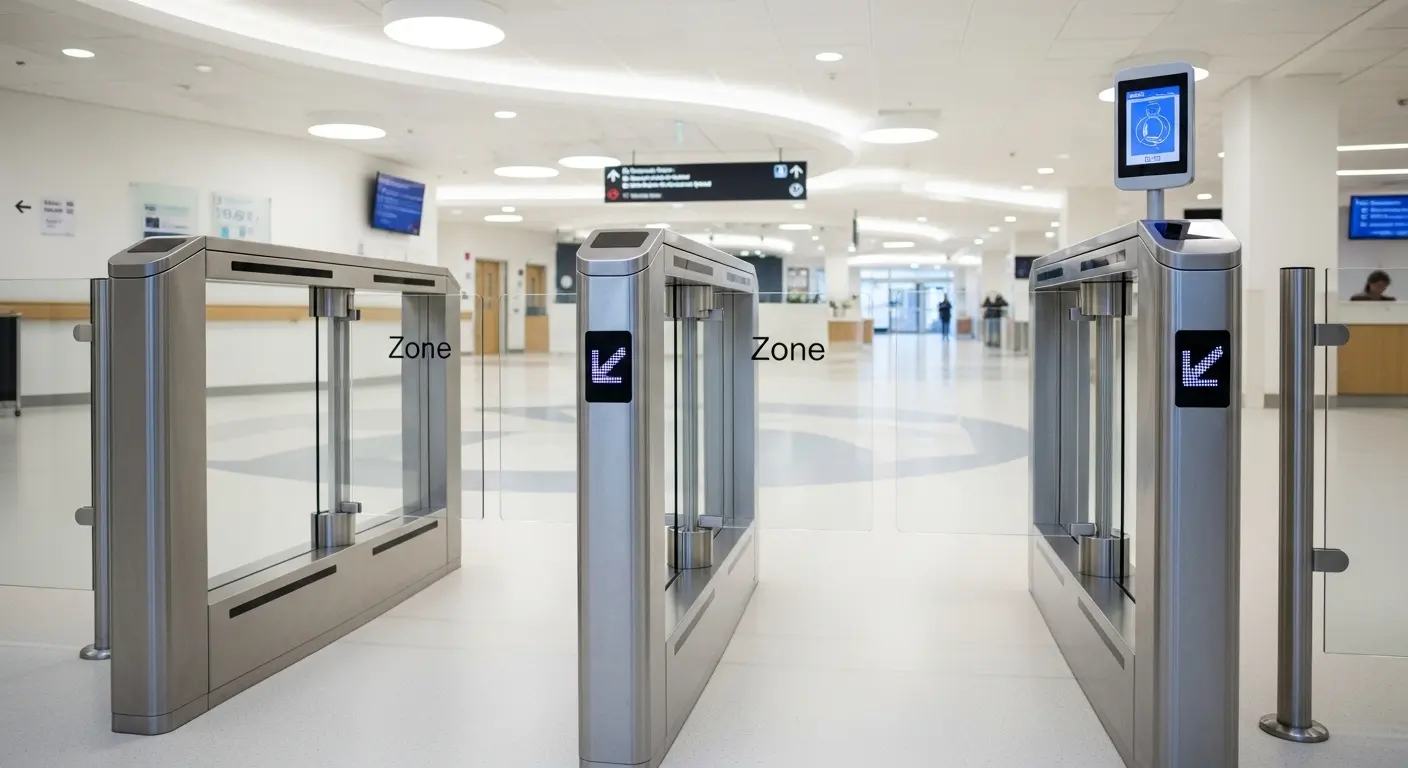
De ziekenhuiszone bepaalt het type poort — niet het algemene type faciliteit. Een glazen klep in de hoofdhal en een anti-tailgating op volle hoogte bij de apotheekapotheek zijn beide de juiste specificaties in hetzelfde ziekenhuis.
| Ziekenhuiszone | Poort | Rijstroken | Geloofsbrief | Belangrijke vereiste |
|---|---|---|---|---|
| Hoofdhal / Atrium | Glasklep of snelheidspoort | 2–6 | PersoneelsRFID-badge, bezoekers-QR, patiënt QR | Hoge doorvoer, Open uiterlijk |
| Poliklinische receptie | Glasflap barrière | 1–3 | RFID-badge, QR-patiënt/bezoeker | Matige doorvoer, ADA-rijstrookje |
| Wijkcorridor | Biometrische swingbarrière | 1–2 | PersoneelsRFID-badge of biometrische | Alleen voor personeel, trambreedte |
| IC / Zwangerschap | Glasflap barrière + biometrisch | 1–2 | Stafbadge, geautoriseerde bezoekers-QR | Beperkte bezoekersregeling, HIPAA-logboek |
| Apotheekapotheek | Anti-tailgating op volle hoogte of biometrische swing | 1–2 | Stafbiometrie | Alleen voor personeel, Max anti-tailgating |
| Beperkt laboratorium | Anti-tailgating op volle hoogte | 1–2 | Stafbiometrie | Maximale perimetercontrole |
| Een&E ingang | Glasflap barrière + Noodoverride-inscripting | 2–4 | RFID-badge, bezoekers-QR, Noodomleiding | Hoge top, Snelle noodomleiding |
Hoofdhal, Een&En, en poliklinische zones
De hoofdhal van het ziekenhuis combineert de ochtendaankomst van het personeel, Poliklinische patiëntenstroom, en bezoekersaankomst binnen een venster van 12 uur. Een glazen klep met een langeafstands-RFID-badgelezer, een QR-patiëntafspraak passestrook, en een apart QR-bezoekerspaskanaal dat alle drie de identiteitspopulaties vanaf één poortpositie dekt. Voor het volledige Ironman-onderwijs- en zorgtoegangconfiguratie-aanbod, zie dePagina voor draaipoortoplossingen voor onderwijs en gezondheidszorg.
De A&E ingang vereist een snelle handmatige noodovername die één personeelslid op afstand kan activeren tijdens een groot incident. Deze omzeiling maakt massale invoer mogelijk zonder individuele credentialvalidatie. Het mag niet meer toevoegen dan 3 seconden na de noodactivatietijd — bevestig deze responstijd bij de ingebruiknamefase.
Wijk, IC, Farmacie, en Beperkte Labzones
De afdeling en de IC-ingangen regelen de toegang van het personeel terwijl ze de beweging van medische apparatuur mogelijk maken. Een biometrische swingbarrière met een brede baan en een doorspeling van 900–1.200 mm met vingerafdruk- of gezichtsherkenning lost beide beperkingen op. Voor de Ironman-vingerafdrukbiometrische toegangspoort die wordt gebruikt bij inzetten in verstrikte ziekenhuiszones, zie deBiometrische voetgangerstoegangspoort met vingerafdrukscanner pagina.
Apotheekapotheken en beperkte laboratoria hebben de hoogste anti-tailgating-standaard van alle ziekenhuiszones nodig. Een anti-tailgating draaihek op volledige hoogte voorkomt fysiek twee ingangen in één inlogeercyclus. Dit is cruciaal in een zone waar gecontroleerde geneesmiddeltoegang voldoet aan de wettelijke auditvereisten. Voor de anti-tailgating volledige hoogte specificatie, zie deAnti-tailgating volledige hoogte draaikruispagina.
Infectiepreventie en selectie van de bevoegdheid voor poorten van ziekenhuisdraaipoorten
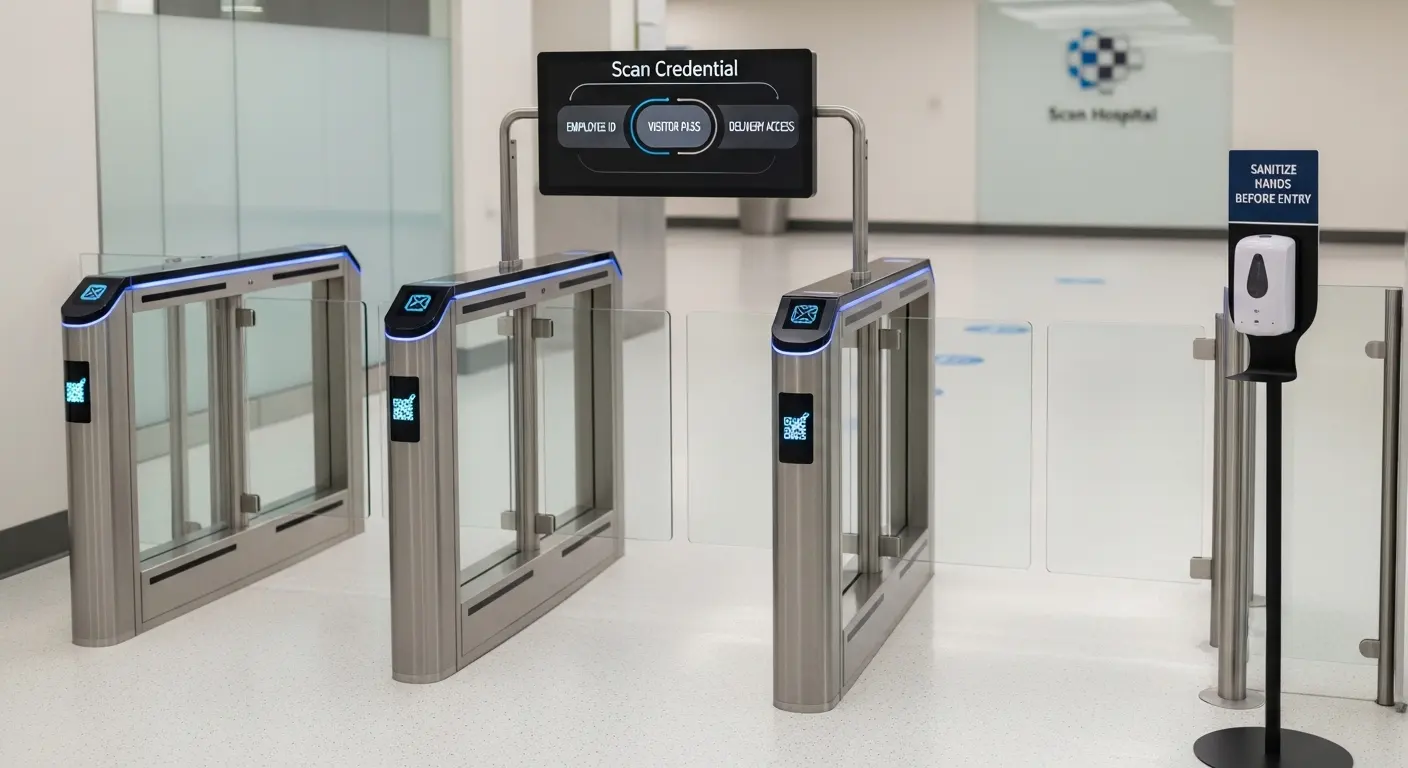
Een toegangsbewijs voor een ziekenhuispoort dat aanraking op een gedeeld oppervlak vereist, vormt een kruisbesmettingsrisico in een klinische omgeving. De juiste aanpak voor infectiecontrole verwijdert het contactpunt volledig uit de verificatiestap van de inloggegevens.
| Soort kwalificatie | Contactniveau | Infectiepreventie | Beste Ziekenhuiszone |
|---|---|---|---|
| Gezichtsherkenning | Nul contact | Hoogst | IC, Farmacie, Alle patiëntgerichte zones |
| Langeafstands-RFID (50–80 mm) | Geen aanraking | Hoog | Hoofdlobby personeelsbaan, Wijkcorridor |
| RFID-standaarden (30–50 mm) | Bijna-contact | Gematigd | Laag-risico administratieve toelating |
| QR-code (mobiel of gedrukt) | Geen contact met het oppervlak | Hoog | Afspraak voor patiënten, Bezoekerspassbaan |
| Vingerafdrukscanner | Hoog contact | Laag — vermijd patiëntgerichte zones | Alleen beperkte personeelszones |
Waarom contactloze legitimaties belangrijk zijn bij een ziekenhuispoort
Gebaseerd op onze ervaring met ziekenhuisinzet, het meest consistente verzoek om een upgrade van infectiepreventie dat we na de eerste installatie ontvangen, is de toevoeging van langeafstands-RFID (50–80 mm) of gezichtsherkenning naar poorten waar een standaard 30 De MM tap-contactlezer was oorspronkelijk gespecificeerd. Deze retrofit verhoogt kosten en verlengt de ingebruiknametijd. Specificeer het contactloze credential bij het bestelmoment — niet als correctie na de installatie.
Bezoekersbewijs Workflow bij de poort van het ziekenhuisdraaihek
Bezoekers gebruiken de stafinbreng niet. Ze ontvangen een tijdsbeperkte QR- of barcodepas na het tonen van een door de overheid uitgegeven ID bij de ziekenhuisreceptie. De pas valideert bij de draaipoort bij elke zone-ingang. Het verloopt aan het einde van het goedgekeurde bezoekvenster. Deze workflow creëert de bewaringsketen van ontvangst-ID tot zone-invoer die vereist is in het HIPAA-bezoekerslogboek en de Joint Commission visitor management standard.
HIPAA en Gezamenlijke Commissie Naleving van ziekenhuispoorten
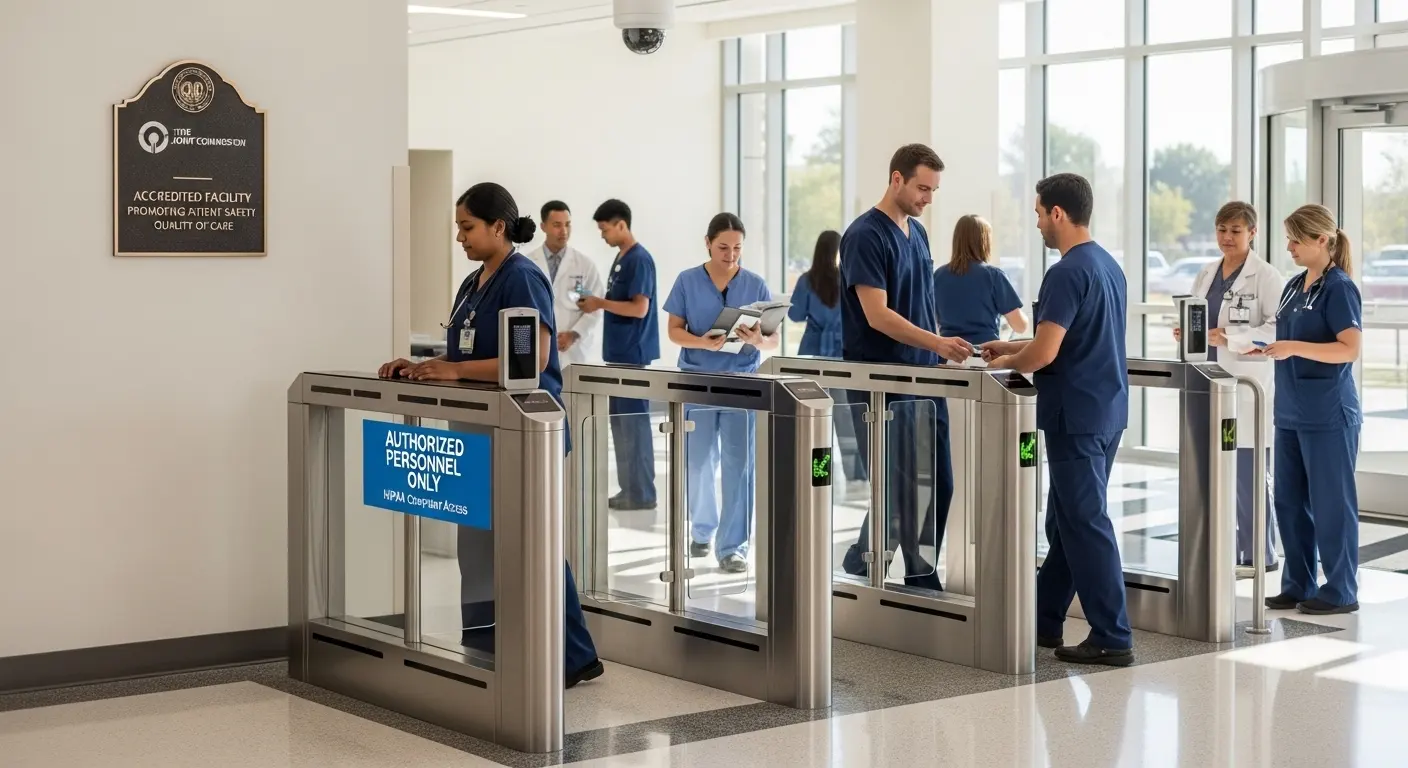
Een ziekenhuispoort ondersteunt direct HIPAA- en Joint Commission-accreditatie door bij elke ziekenhuisingang een fysieke en data-geregistreerde toegangscontrolelaag te creëren.
Drie nalevingsfuncties die elke ziekenhuispoort moet uitvoeren
Tijdgestempelde bezoekersaudittrail: Bij elk bezoekersinstapevenement wordt de identiteit van het inloggegevens geregistreerd, Tijdstempel, en toegangspunt tot het toegangscontrole- of bezoekersbeheerplatform van het ziekenhuis. Dit logboek voldoet aan de HIPAA-eis voor een registratie van wie toegang heeft gehad tot beschermde gezondheidsinformatiezones — inclusief patiëntafdelingen, Klinische gebieden, en medische archiefkamers.
Aangewezen toegangscontrole: HIPAA- en Joint Commission-normen vereisen dat ziekenhuizen specifieke bezoekerstoegangspunten aanwijzen en monitoren. Een ziekenhuispoort met draaipoort bij de hoofdhal en ingangen van de beperkte zones handhaaft het aangewezen toegangsbeleid op hardwareniveau — zonder dat het receptiepersoneel elk instapevenement in de gaten houdt.
Integratie van bezoekersidentificatie: Bezoekersbeheersystemen gekoppeld aan ziekenhuispoorten kunnen bezoekersgegevens bij het inchecken afschermen van dreigingsdatabases en registers voor zedendelinquenten — voordat een QR-bezoekerspas wordt uitgegeven. Voor Avagilon 2025 Gids voor ziekenhuisbezoekersbeheer, Deze screeningsstap is standaardpraktijk bij geaccrediteerde zorginstellingen.
Voor de Ironman anti-tailgating AB-draaipoort die wordt gebruikt bij ziekenhuis-HIPAA-conforme bezoekersbeheer-implementaties, zie deanti-tailgating AB-draaihek pagina.
NFPA 101 Fail-safe uitgang — De niet-onderhandelbare vereiste voor ziekenhuispoort
Elke ziekenhuispoort die op een uitgangspad wordt geïnstalleerd, moet voldoen aan de NFPA 101 Life Safety Code. Deze eis gaat boven elke andere toegangscontrole- of anti-tailgating-specificatie. Er geldt geen uitzondering in een bezette klinische faciliteit.
Vier NFPA 101 Vereisten voor elk ziekenhuispoort
Fail-safe open modus: Bij brandalarm activeren of uitval van netstroom, Alle poorten op het uitgangspad trekken zich terug naar de open positie binnen 3 seconden en open blijven. Specificeer nooit failsafe-lock-closed voor een poort op een nooduitgangsroute.
Enkel-action handmatige override-override: Een single-action override moet aan beide zijden van de poort toegankelijk zijn — bedienbaar voor iedereen tijdens een noodevacuatie, zonder sleutel of code nodig.
Batterijreserve voor poorten van de beperkte zone: Voor apotheek- en laboratoriumpoorten bij gesloten loop-operatie, een UPS-batterijbackup van 4–8 uur zorgt voor gecontroleerde toegang tijdens een gedeeltelijke stroomuitval. De fail-safe override-override-regel voor het brandalarm krijgt volledige voorrang boven batterij-ondersteunde gecontroleerde toegang.
Integratie van direct vuurpaneel: De poortcontroller accepteert een droogcontactinput van het brandalarmbedieningspaneel van het ziekenhuis. De failsafe-trigger moet rechtstreeks van het brandpaneel komen — niet van een secundair softwarecommando dat onderhevig is aan netwerkvertraging.
Bevestig de integratie van brandpanelen en failsafe-configuratie in de specificatiefase. Een ziekenhuispoort kan niet in gebruik worden genomen in een klinische zone zonder een bevestigd resultaat van de brandpaneelintegratietest op record.
Een fabrieks-directe offerte verkrijgen voor de poort van de draaipoort van uw ziekenhuis
Vier items zijn voldoende voor een volledige fabrieks-directe gespecificeerde offerte binnen 12 Openingstijden.
- Definieer je ziekenhuiszone en klinische opdracht: Hoofdhal / wijk / IC / Farmacie / Beperkt laboratorium / Een&En + patiëntgerichte of alleen personeelsaanduiding, ADA-rijstrookvereiste, en voorkeur voor infectiepreventie-credentials
- Bevestig je compliance-eisen: HIPAA-bezoekersauditspoor, Gezamenlijke Commissie wijst toelatingsbeleid aan, Integratie van brandpaneel voor NFPA 101 fail-safe open modus
- Bereken je rijstrookaantal: Piekingangen per 10-minutenvenster ÷ poort PPM = rijstroken; Voeg bij elke patiëntgerichte gatepositie één ADA/brede rijstrook toe
- Dien je projectbrief in: Bezoek de Pagina voor draaipoortoplossingen voor onderwijs en gezondheidszorg — ontvang een fabrieks-directe offerte binnen 12 Openingstijden, met CE, ISO9001, FCC, en RoHS-certificeringsdocumenten en NFPA 101 Failsafe configuratiegegevensblad inbegrepen
Veelgestelde vragen
Q1: Welk type draaipoortpoort is het beste voor een ziekenhuisingang?
Voor de hoofdhal van een ziekenhuis of poliklinische ontvangst, Een glazen flap barrière is de beste poort voor een ziekenhuisdraaipoort — 40–60 ppm doorvoer, Een open, niet-intimiderend uiterlijk voor patiënten en bezoekers, Touchless credentialcompatibiliteit voor infectiepreventie, en ADA-conforme breedbaanbeschikbaarheid. Een snelheidspoort (50–80 ppm) geschikt voor grote atria van het academiehuis en hoofdingangen waar de doorvoer van ploegenwissels de belangrijkste zorg is. Draaipoorten op volle hoogte zijn niet geschikt voor ziekenhuisingangen die naar patiënten gericht zijn — hun fysieke kooiprofiel veroorzaakt patiëntangst en is klinisch ongeschikt voor een hoofdhal of polikliniek.
Q2: Hoe ondersteunt een ziekenhuispoort de naleving van HIPAA-regelgeving??
Een ziekenhuispoort ondersteunt HIPAA-naleving door een tijdstempel te creëren, Een auditspoor gekoppeld aan het diploma voor elk bezoekersevenement bij de aangewezen ziekenhuisingangen. Dit logboek registreert wie toegang heeft tot beschermde gezondheidsinformatiezones — patiëntafdelingen —, Klinische gebieden, en medische archiefkamers — en voldoet aan de HIPAA-eis voor toegang tot het bijhouden van dossiers. In combinatie met een bezoekersbeheersysteem dat de ID bij de receptie controleert en een tijdsgebonden QR-pas uitgeeft voordat de draaipoort wordt toegewezen, de poort creëert de volledige keten van bewaring van de ontvangst-ID tot de zone-ingang die de bezoekersbeheerstandaard van de Joint Commission vereist.
V3: Welke legitimatie moet een ziekenhuispoort gebruiken voor infectiepreventie?
Voor ziekenhuispoorten in klinische zones, Het juiste infectiecontrole-inlogeerbewijs verwijdert het contactcontact uit de verificatiestap van het inloggegevens.. Gezichtsherkenning (Nul contact) is de hoogst beoordeelde infectiepreventiebevoegdheid voor patiëntgerichte zones. Langeafstands-RFID (50–80 mm leesbereik) Stelt medewerkers in staat een badge te tonen zonder de lezer aan te raken — geschikt voor hoofdlobby-personeelslanes en wijkgangen. QR-code of barcode bezoekerspassen zijn geschikt voor bezoekersbanen — de pas wordt weergegeven op een mobiel scherm en gelezen zonder contact met het oppervlak. Vingerafdrukscanners worden niet aanbevolen voor ziekenhuiszones met betrekking tot patiënten vanwege het kruisbesmettingsrisico op het gedeelde contactoppervlak.
Q4: Wat is de failsafe-eis voor een ziekenhuispoort?
Volgens NFPA 101 Life Safety Code, Elke ziekenhuispoort die op een uitgangspad is geïnstalleerd, moet naar de open positie binnen de ruimte worden ingetrokken 3 seconden na brandalarm activeren of netstroomverlies — en blijven open gedurende de duur van de noodsituatie. Deze fail-safe open configuratie is een niet-onderhandelbare brandcode-vereiste. Een failsafe-slothek op een nooduitgangsroute voor patiënten overtreedt de NFPA 101 en mag niet worden gespecificeerd of geïnstalleerd. Bovendien, De fail-safe trigger moet afkomstig zijn van een directe droogcontactinvoer van het brandalarmbedieningspaneel van het ziekenhuis — niet van een secundair softwarecommando. Bevestig de integratie van brandpanelen in de specificatiefase, Voor installatie.
V5: Welke ziekenhuiszones hebben een draaihekhek nodig?
De hoofdhal, Een&E ingang, en poliklinische receptie zijn de primaire poortzones voor ziekenhuizen — zij beheren het hoogste gemengde aantal inschrijfgegevens (staf, patiënten, en bezoekers) en vereisen de configuratie met de hoogste doorvoersnelheid. Afdelingsgangen en ingangen van IC- en kraamafdelingen hebben een biometrische schommelbarrière alleen voor personeel nodig met een brede ADA-rijstrook voor trolley- en apparatuurtoegang. Apotheekapotheken en beperkte laboratoria hebben het hoogste anti-tailgating-niveau nodig — een anti-tailgating draaihek op volle hoogte of biometrische schommelbarrière waar alleen toegang voor personeel en gecontroleerde medicijncontrole-eisen gelden. Administratieve gebieden en medische archiefkamers kunnen ook draaihekcontrole vereisen, waar HIPAA-toegangsregistratie vereist is bij zone-ingang.
V6: Is een draaikruis van volle hoogte geschikt voor een ziekenhuisingang?
Nee — draaihekken op volle hoogte zijn niet geschikt voor ziekenhuisingangen die naar patiënten gericht zijn. Hun afgesloten fysieke kooiprofiel veroorzaakt angst bij patiënten, is ontoegankelijk voor rolstoelgebruikers en patiënten met mobiliteitsbeperkingen zonder een aparte ADA-bypassbaan, en een gevangenisachtig uiterlijk dat onverenigbaar is met een therapeutische zorgomgeving. Volgens klinische feedback geciteerd in de literatuur over zorgbeveiliging, Glazen of open draaipoorten met open zichtlijnen zorgen voor aanzienlijk lagere angstniveaus bij ziekenhuisingangen. Volledige hoogte draaipoorten moeten alleen worden gespecificeerd in beperkte ziekenhuiszones voor personeel — apotheekapotheken, Beperkte laboratoria, en serverruimtes — waar fysieke perimetercontrole de primaire opdracht is en er geen patiëntgerichte toegang is.
Drie beslissingen die de specificatie van uw ziekenhuispoort definiëren
Poorttype gekoppeld aan ziekenhuiszone en patiëntervaringsbrief., Touchless credential bevestigd in de specificatiefase voor infectiepreventie, en NFPA 101 failsafe open modus met directe brandweerpanelintegratie bevestigd vóór installatie — deze drie beslissingen bepalen of een ziekenhuispoort voldoet aan de klinische, naleving, en operationele briefing vanaf dag één.
Ironman produceert fabrieksmatige ziekenhuispoorten voor hoofdhalzen, Poliklinische recepties, Wijkgangen, IC- en kraamingangen, Apotheekapotheken, en beperkte laboratoria verspreid 50+ Landen. Dien je ziekenhuiszonebrief in, Patiënten- en bezoekerskwalificaties, en nalevingsvereisten via deDraaipoort voor ziekenhuizen pagina voor een fabrieks-directe offerte binnen 12 Openingstijden.
