


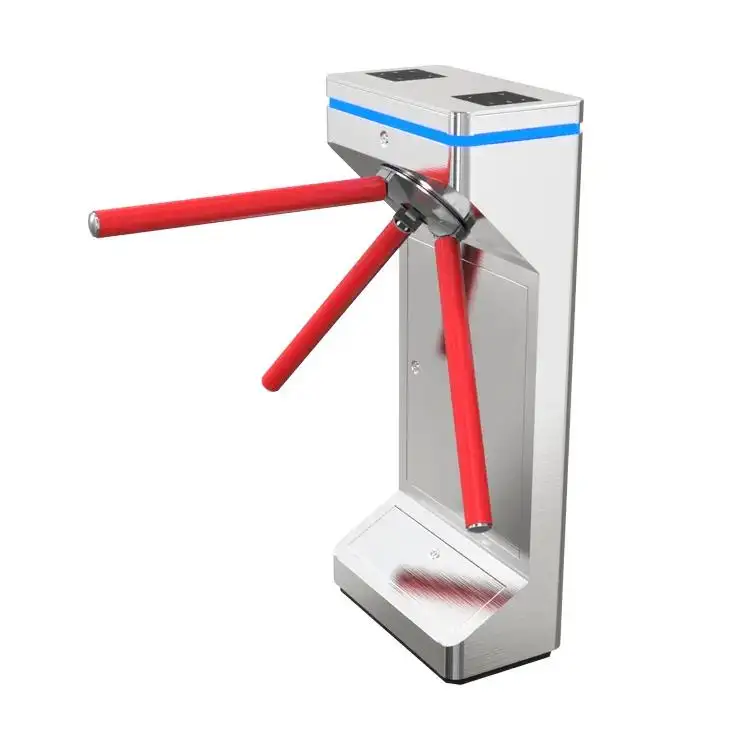
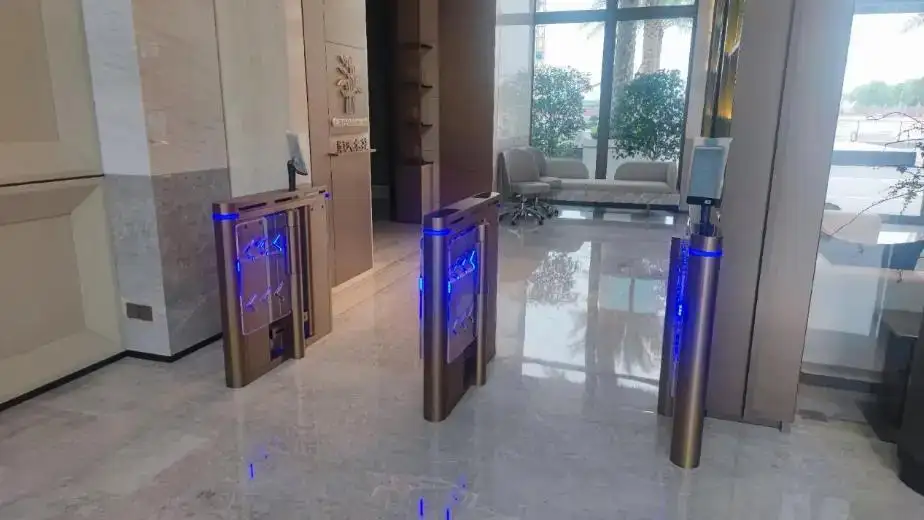
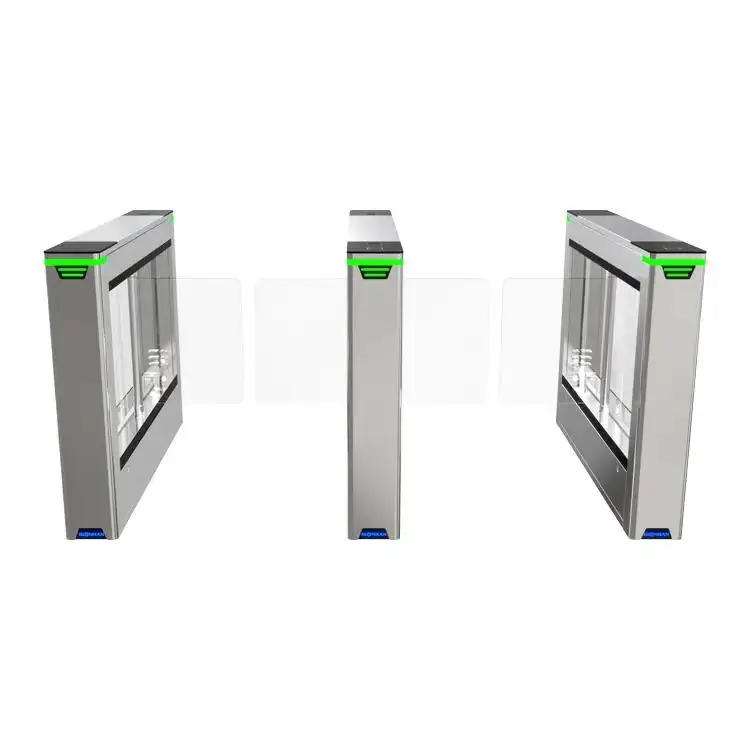
Buitenpoort van de draaipoort: Typen, Specificaties, Omgevingen, en Installatiegids
2026-03-21


Een buitenpoort met draaipoort staat voor omstandigheden waarvoor een binnenmodel nooit ontworpen is — directe regen, Temperatuurextremen, Stof in de lucht, UV-blootstelling, Zoute lucht, en fysieke belastingen van door het weer aangedreven puin. Het specificeren van de verkeerde poort voor een buitenpositie betekent niet dat de poort meteen faalt. Het betekent dat het geleidelijk faalt door corrosie, Elektronische vochtintocht, en afdichtingsdegradatie — meestal nadat de garantie is verlopen en ruim nadat de installatiekosten zijn verlaagd.
Deze gids behandelt welke soorten buitenpoorten er bestaan, welke specificaties ze per omgeving nodig hebben, en hoe je ze correct installeert zodat ze de levensduur houden waarvoor ze zijn goedgekeurd.
Wat maakt een buitenpoort anders dan een binnenmodel?
De verschillen tussen een binnen- en een echte buitenpoort met draaipoort zijn meetbaar aan de hand van vijf specifieke parameters:
1. IP Ingress Protection Rating
Binnenpoorten dragen doorgaans IP44 (Spatbestendig, deeltjesbeschermd). Een buitenpoort met draaipoorten heeft minimaal IP65 nodig voor directe blootstelling aan regen — volledig stofdicht, waterstraalbestendig vanuit elke richting. Voor kustomgevingen binnen 1 km van de zee, IP65 plus SUS316 roestvrij staal is de juiste specificatie — IP65 afdicht de elektronica, SUS316 beschermt de kaststructuur tegen chloridecorrosie.
2. Kastmateriaal en kwaliteit
SUS304 bij 1,5 mm volledige las is de commerciële buitenstandaard. SUS201 — vaak gebruikt in goedkopere "edelstaal" Gates — corrodeert binnen 12–24 maanden bij buitenfuncties die zijn blootgesteld aan vochtigheid en schoonmaakmiddelen. Voor kust- en chemisch agressieve omgevingen, SUS316 is vereist.
3. Bedrijfstemperatuurbereik
Standaard binnenhekken: 0°C tot 50°C. Een buitenpoort met draaipoorten heeft minimaal -20°C tot 60°C nodig. Voor winterklimaten onder nul, Een verwarmd elektronicacompartiment en een verwarmd aandrijfmechanisme voorkomen koude startstoringen en ijsvorming in het mechanisme.
4. Afdichting van aandrijfmechanismen
Het armdraaipunt, Paneelscharnier, of de vleugelterugtrekgleuf — waar de barrière de kast verlaat — is het meest kwetsbare punt om water binnen te laten. Een buitenpoort met draaipoorten gebruikt afgesloten lagerassemblages op alle doorbraakpunten van het mechanisme, met dubbellaagse pakkingen en drainagekanalen om water weg te leiden van de elektronica-holte.
5. UV-weerstand
Direct zonlicht degradeert onbeschermde polymeercomponenten — sensorlenzen —, Indicatordeksels, en pakkingen — binnen 12–18 maanden in omgevingen met veel UV-licht. Een buitenpoort van draaihekken gebruikt UV-gestabiliseerde polymeercomponenten en poedercoating of geborstelde roestvrijstalen afwerking die niet degradeert bij langdurige blootstelling aan de zon.
Soorten buitenpoorten en waar elk poortje past
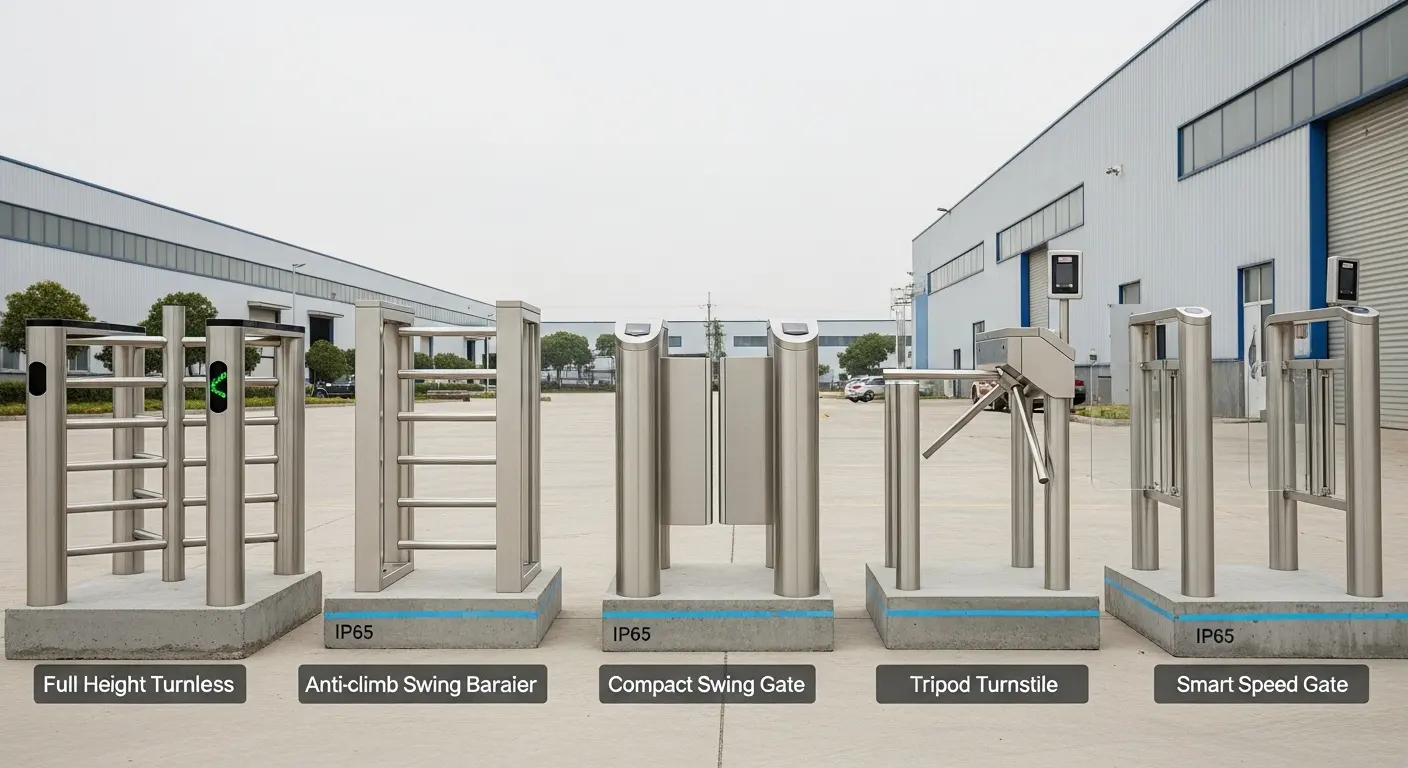
Niet elk poorttype is beschikbaar in buitenversies, en degenen die aanzienlijk verschillen in afdichtingscomplexiteit en geschiktheid voor inzet:
Buitenpoort met draaipoort op volle hoogte
De meest gespecificeerde buitendraaipoort voor hoogbeveiligde buitenperimeters. Vloer-tot-plafond constructie (2,100–2.300 mm) Elimineert klim-over bypass. Het gesloten kanaalontwerp betekent dat alleen de draaipunten van de roterende arm buiten moeten worden afdicht — elektronica bevindt zich in een afgesloten basisruimte die beschermd is tegen directe blootstelling.
EenDraaihek op volle hoogte In buitenconfiguratie past het bij industriële perimetertoegangspunten, Toegangspoorten op de bouwplaats, Externe perimeters van de gevangenis, power station access, en stadion-ingangsbanen — elke omgeving waar maximale fysieke beveiliging gecombineerd met volledige weersbestendigheid de primaire vereiste is.
Voor inzet in koud klimaat, een buitenpoort op volle hoogte met een verwarmde elektronicaruimte en IP65-classificatie regelt temperatuurwisselingen van -30°C tot 50°C — het armmechanisme werkt vrij bij onder nul omdat de behuizing ijsophoping op de draaipunten voorkomt.
Buitenhek tegen klim schommelbarrière
Voor buitenperimeters met middelhoge beveiliging waar volledige hoogte niet is gespecificeerd, maar standaard poorten op heuphoogte wel een klimrisico vormen, eenAnti-klim swingbarrièrehek in IP65-configuratie verhoogt het barrièrepaneel tot 1.800 mm — waardoor de fysieke bypass-gap wordt geëlimineerd zonder het volledige hoogteprofiel te hanteren.
De buitenhek met een anti-klim schommelbarrière past bij de schoolomheining, Grenzen van de universiteitscampus, Randen van onderzoeksfaciliteiten, en gemeenschapstoegangspunten waar het beveiligingsniveau zich bevindt tussen een standaard heuphoogte barrière en een volledige hoogte perimeterpoort. Bovendien, het schogelbarrière-formaat biedt de brede ADA-toegankelijkheid die volledige perimeterpoorten vaak niet kunnen evenaren in één enkele unit.
Compact buitendraaihek met draaipoort
Voor buitenfuncties met beperkte vloeroppervlakte — een ingang van een tweede gebouw, een toegangspunt op het dak, of een opening tussen twee gebouwvleugels — eencompacte draaipoortpoort in IP54-configuratie biedt volledige barrièrefunctionaliteit in een kleinere kastafdruk, waardoor het mogelijk is om een buitentoegangshek te plaatsen op plekken waar een standaard standaard schommelschrank fysiek niet past.
Buitenslimme snelheidspoort buiten
Standaard snelheidspoorten zijn alleen binnen (IP44). Een echt buiten-gecertificeerdeSlimme snelheidspoort draaipoort in IP54- of IP65-configuratie wordt een dubbel afgesloten paneelsleuf aan de bovenkant van de kolom gebruikt, Drainagekanalen aan de kolombasis, en afgesloten lagerassemblages bij het paneelintrekmechanisme — waardoor overdekte semi-buitenpositionering in de ingangsvestibules van gebouwen mogelijk is, Overdekte wandelpaden, en door het overdak beschermde ingangen van openbare gebouwen.
Glazen schuifpoort draaipoort
Voor premium buiteningang bij moderne commerciële of civiele gebouwen, eenglazen schuifpoort draaihek biedt architectonische glaspanelesthetiek in een schuifmechanisme dat de behoefte aan schompelboogruimte van een schodelbarrière vermijdt. In IP54 buitenconfiguratie, De schuifpoort past bij overdekte lobby-ingangen, toegangspunten voor het atrium, en premium kantoorgebouwen, waar zowel ontwerp, uiterlijk als weersbescherming het projectgewicht dragen.
Buitendraaihek per Inzetomgeving
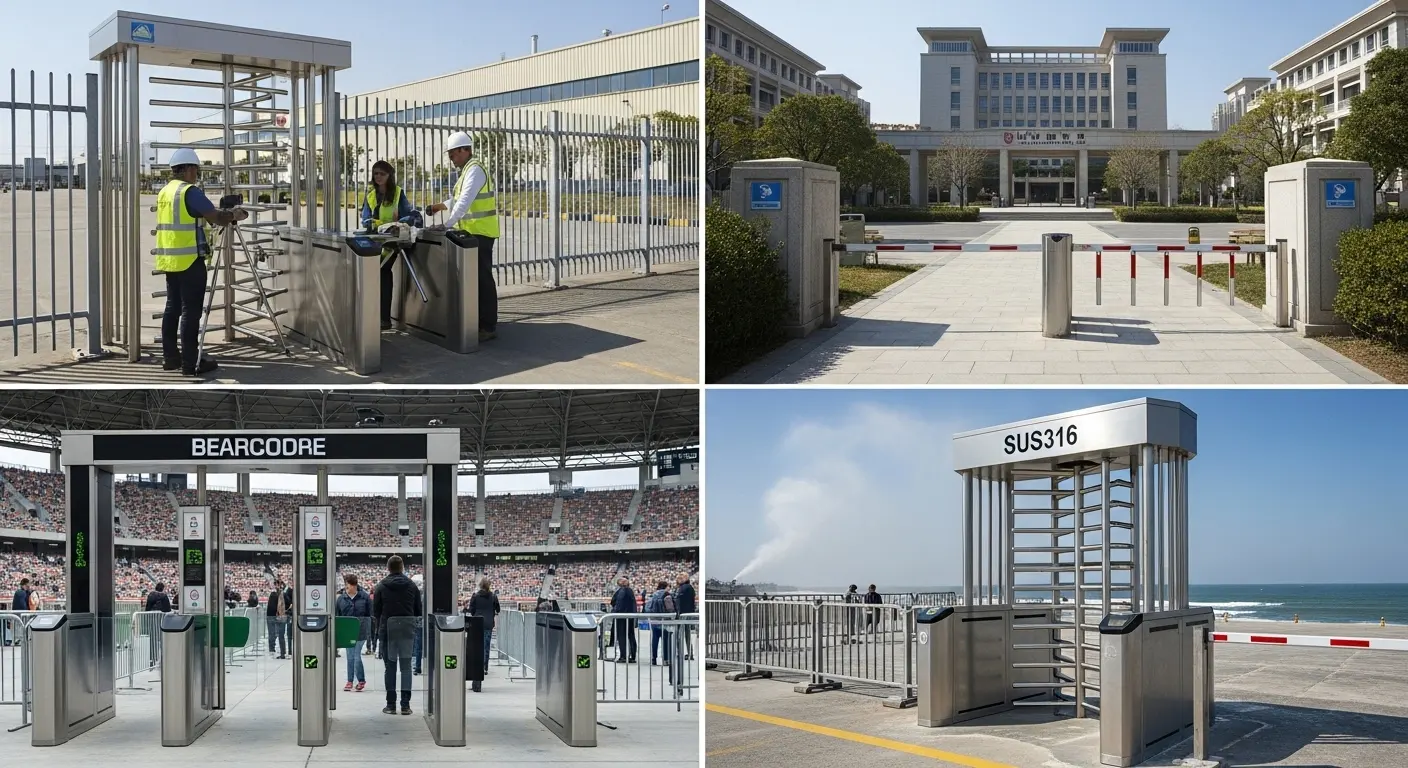
Verschillende buitenomgevingen stellen verschillende eisen — en de specificatie van de juiste poort verandert aanzienlijk afhankelijk van de locatie:
Industriële en fabrieksperimeters
De belangrijkste vereisten: IP65 stof- en waterbescherming, SUS304 volledige lasconstructie op 1,5 mm , borstelloze motor met een levensduur van 3–5 miljoen cyclus, UHF RFID langeafstandslezer voor werknemers die PBM dragen, en failsafe noodontgrendeling die is aangesloten op het brandalarmsysteem op locatie.
Buitenstatief en draaihekken op volle hoogte zijn standaard bij de fabrieksperimeters — een statief voor algemene toegangsstroken voor werknemers, Volledige hoogte voor toegang tot de beperkte zone langs de algemene rijstroken.
Campus en universiteitsperimeters
Universiteitscampussen hebben doorgaans een buitenpoort nodig die veiligheid en toegankelijkheid in balans brengt — brede rijstroken voor rolstoel- en fietstoegang naast standaard voetgangerspaden, barcode- of RFID-inloggegevens voor studenten-ID-kaarten of QR-code dagpassen, en esthetiek die past bij de architectuur van de campus.
Voor een voetgangersperimetercontrolepunt op de campus, deToegangspoort van de campus in de buitenconfiguratie van IP65 voldoet aan al deze vereisten — opties voor meerdere referenties voor lezers, Brede rijstrook ADA-toegankelijkheid, geborstelde SUS304-afwerking, en failsafe noodontgrendeling — in één enkele buitenunit die geschikt is voor de open ruimte, Campusomgeving gericht op voetgangers.
Stadions en evenementlocaties
Buitenlocaties voor evenementen hebben hoge doorvoer buitenpoorten nodig die grote aantallen bezoekers verwerken in een kort voortijdig tijdsbestek, barcode- of QR-ticketscanning afhandelen onder verschillende lichtomstandigheden (inclusief direct zonlicht), en de schoonmaakspoeling na het evenement overleven.
EenBarcode draaipoort in de buitenconfiguratie van IP65 voldoet aan alle drie de vereisten — de barcodelezer gebruikt infraroodscanning die werkt in direct zonlicht zonder verblindingsinterferentie, de kast overleeft de afslang na het evenement met IP65, en de doorvoersnelheid (30–40 ppm in gecontroleerde modus) Verwerkt grote instromen effectief wanneer meerdere rijstroken parallel rijden.
Overheids- en Openbare Gebouwen
Buitenpoorten met toegangspoorten van overheidsgebouwen moeten veiligheid in balans brengen met toegankelijkheid — ADA-conforme brede rijstroken, gezichtsherkenning of compatibiliteit met RFID-inloggegevens, Schoon architectonisch uiterlijk, en weerbestendigheid voor het klimaatgebied van het gebouw.
Voor een slimme ingang in een warmklimaatomgeving — hoge UV-blootstelling, Zand en stof, de temperatuur piekt boven de 50°C — deQatar slimme toegangspoort snelheidspoort draaihek casestudy toont aan hoe een overdekte toegangssnelheidspoort in IP54-configuratie met UV-gestabiliseerde polymeercomponenten en een warmtebeheerde elektronica-ruimte presteert in een van de meest veeleisende buitenklimaatomstandigheden ter wereld.
Kust- en mariene locaties
De meest veeleisende buitenomgeving met draaipoorten. Zout-luchtchloride valt SUS304 aan bij lasnaden en bevestigingspunten binnen 2–5 jaar. Op deze locaties, De constructie van SUS316 vervangt SUS304 als basislijn — naast IP65-elektronica afdichting, Afgesloten lagerassemblages, en passivatiebehandeling van alle buitenste laspunten.
Installatie van buitendraaihekken: De niet-onderhandelbare zaken
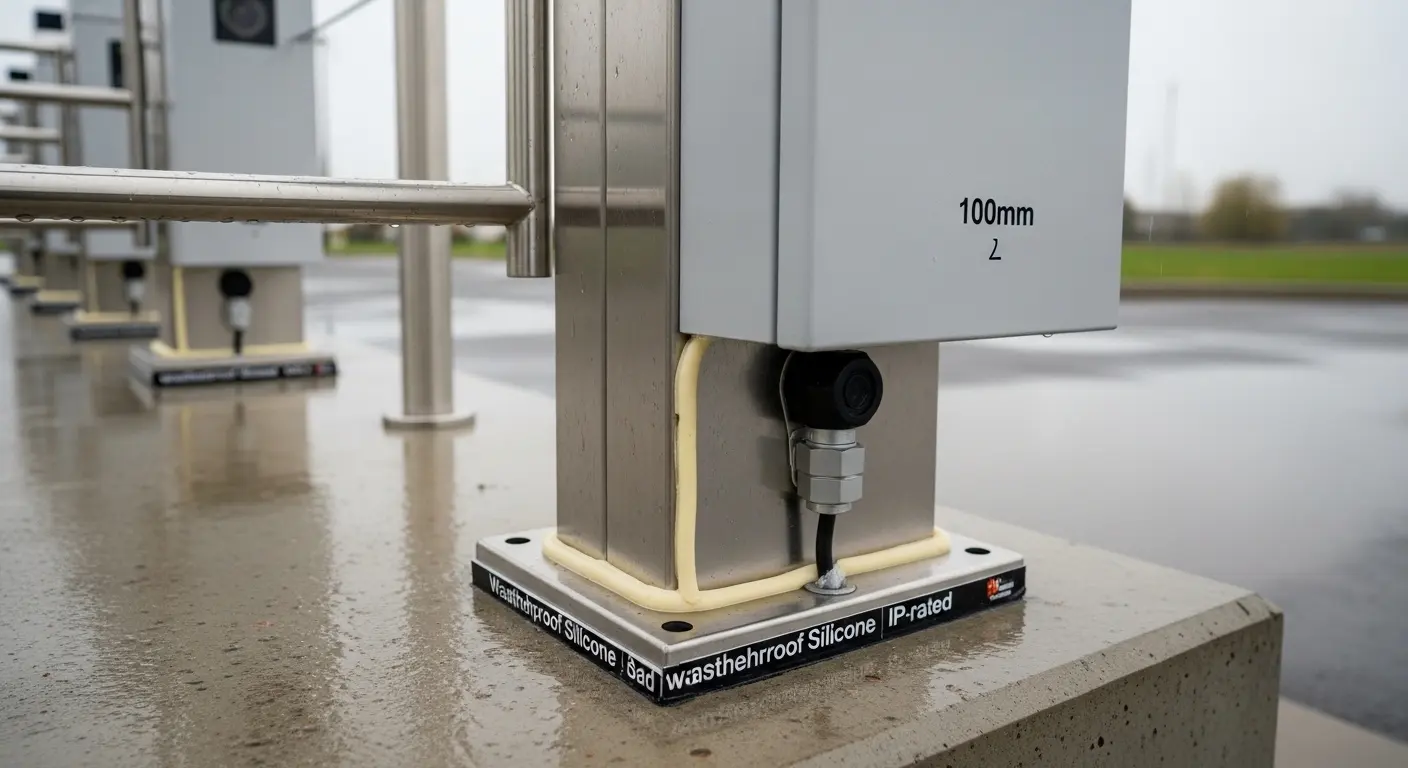
De poortspecificatie goed krijgen is maar de helft van het werk. Buiteninstallaties falen regelmatig omdat de installatie zelf geen basiswaterbeheer behandelt — ongeacht wat de IP-classificatie van de poort op het specificatieblad aangeeft:
Betonnen basishoogte
Bouw de betonnen installatiebasis minstens 100 mm boven het hoogste verwachte waterophopingsniveau. Meet de werkelijke stilstaande waterdiepte na de zwaarste typische neerslag van de locatie — niet de gemiddelde neerslaggegevens. De poortbasisflens moet te allen tijde de waterlijn passeren.
Siliconenafdichting op de interface van kast tot basis
Dicht de volledige omtrek van de kastvoetflens tot aan de betonnen sokkel af met weerbestendige siliconen — alle vier de zijden, continu toegepast. Elke opening maakt waterafvoer mogelijk onder capillaire werking, waarbij het IP-zegel volledig van onderaf wordt omzeild.
IP-gecertificeerde kabelversleutels bij elk toegangspunt
Elke kabel die de kast binnenkomt of verlaat — stroomvoorziening, Datalijn, RFID-lezerkabel, alarmuitgang — moet door een fabrieksgespecificeerde IP-gecertificeerde kabelversleuteling gaan. Veldgeboorde gaten zonder kabeldoorvoeringen verlagen de geïnstalleerde IP-classificatie tot onder de IP44, ongeacht het geclassificeerde IP van de poort op het productlabel.
Condensatiebeheer
In elke omgeving met aanzienlijke dag/nacht temperatuurvariatie — woestijn, Continentaal, of kustklimaten — condensatie vormt zich binnen de elektronica-ruimte, zelfs in correct afgesloten IP65-poorten. Een silicagel-dessicantpak in de elektronica-ruimte, vervangen op het jaarlijkse onderhoudsschema, beheert interne condensatie effectief. Voor temperaturen onder nul, Een fabrieksverwarmer in de elektronicaruimte voorkomt bevriezingwekkende condensatie bij koude start.
Jaarlijks onderhoudsschema
Een buitenpoort met draaipoorten vereist jaarlijkse onderhoudsbezoeken om het deksel te bedekken: Inspectie en vervanging van de pakking waarbij compressie verloren gaat, Lagerassemblage smering op alle draaipunten, Infraroodsensor lensreiniging (Buitenomgevingen verzamelen stof, stuifmeel, en insecten op lensoppervlakken), en een IP-seal integriteitstest na elke kabeltoevoeging of -aanpassing.
Veelgestelde vragen over buitenpoorten met draaideuren
Q: Welke IP-classificatie heeft een buitenpoort nodig?
Een: IP65 is het minimum voor een volledig blootgestelde buitenpoort met draaipoorten die directe regen ontvangt vanuit elke hoek. Deze classificatie biedt totale stofdichte bescherming en weerstand tegen waterstralen uit elke richting. IP54 is voldoende voor semi-buitenfuncties onder een permanent dakkapje dat directe regen op de kast voorkomt. Voor kustlocaties binnen 1 km van zee, IP65 gecombineerd met SUS316 roestvrij staal is vereist — de IP-classificatie beschermt de elektronica, terwijl SUS316 de kast beschermt tegen zout-luchtchloride corrosie.
Q: Welke soorten buitenpoorten zijn er beschikbaar?
Een: De belangrijkste buitenpoorttypes zijn: Draaipoort op volle hoogte (Meest gebruikelijk voor hoogbeveiligde perimeters); Anti-klim swingbarrièrehek (Buitenperimeters met middelhoge beveiliging); Compacte draaipoort (ruimtebeperkte buitenfuncties); buitenstapootdraaipoort (Fabrieks- en industriële toegangspoorten); Buiten, slimme snelheidspoort buiten (Overdekte entreevestibules); en glazen schuifdeur (Premium overdekte buiteningangen). Modellen op volle hoogte en statief worden het vaakst ingezet in volledig blootgestelde buitenposities; Speed- en schuifpoortmodellen vereisen doorgaans een permanente overkapping.
Q: Kan een standaard binnenpoort met draaideuren buiten worden geïnstalleerd??
Een: Nee — niet voor een positie met directe regen, Hoge luchtvochtigheid, Temperatuurextremen, of UV-blootstelling. Een standaard binnenhek (IP44) zal elektronisch vocht binnendringen ervaren, Kastcorrosie, en pakkingbreuk binnen 12–18 maanden in een directe buitenpositie. Voor elke buiteninstallatie, de poort moet een IP65-classificatie van een geaccrediteerd onafhankelijk testlaboratorium hebben — niet alleen een marketingclaim — plus SUS304 minimum kastmateriaal en een bedrijfstemperatuurbereik dat past bij het klimaat van de locatie.
Q: Welke credentialsystemen werken met buitenpoorten met draaipoorten?
Een: RFID-kaart, UHF langeafstands-RFID (voor industriële arbeiders die PBM dragen), QR-code en barcode-scannen (voor evenementlocaties en campusinzet), gezichtsherkenningscamera's met UV- en schittecompensatie (voor buitenfuncties in direct zonlicht), en mobiele NFC-inloggegevens. Alle hardware van de inloggegevenslezer moet dezelfde of een hogere IP-classificatie dragen dan de poort zelf — een standaard RFID-lezer die in een niet-afgesloten buitenpositie is gemonteerd, zal eerder uitvallen dan de poortkast.
Q: Hoe voorkom ik dat een buitenpoort van een draaipoort faalt bij temperaturen onder nul?
Een: Specificeer een poort met een fabrieksverwarmd elektronicacompartiment, Verwarmd aandrijfmechanisme (om ijsvorming bij het armdraaipunt of de intrekgleuf van het paneel te voorkomen), een bedrijfstemperatuurwaarde van minimaal -20°C (-35°C voor extreem koude klimaten), en lage-temperatuur flexibele pakkingen (Standaard rubberen pakkingen verstevigen onder -10°C en verliezen afdichtingseffectiviteit). Voer jaarlijks een winterbestendigheidscontrole uit vóór het koude seizoen: Inspecteer de flexibiliteit van de pakking, Bevestig de functie van het verwarmingselement, en verwijder eventueel vuil uit de afvoerkanalen van de basis.
