


Draaihek met RFID: Hoe het werkt, Kaarttypes en welke poort het juiste voor jou is.
2026-04-08


EenDraaipoort met RFID blijft de meest gebruikte toegangscontroleconfiguratie ter wereld — niet omdat het de nieuwste optie is, maar omdat het betrouwbaar op schaal werkt, elke dag, In bijna elk type faciliteit. Van bedrijfskantoren en universiteitscampussen tot transitknooppunten en productielocaties, RFID-inloggegevens verwerken dagelijks miljoenen toegangsgebeurtenissen met minimale faalpercentages en eenvoudig beheer. Als je een specificatie geeftDraaipoort met RFID voor een nieuw project of het upgraden van een bestaand systeem, Deze gids behandelt de technologie, De kaarttypes die ertoe doen, Welke poorttypes werken het beste, en hoe je de meest voorkomende koopfouten kunt vermijden.
Wat is een draaihek met RFID?
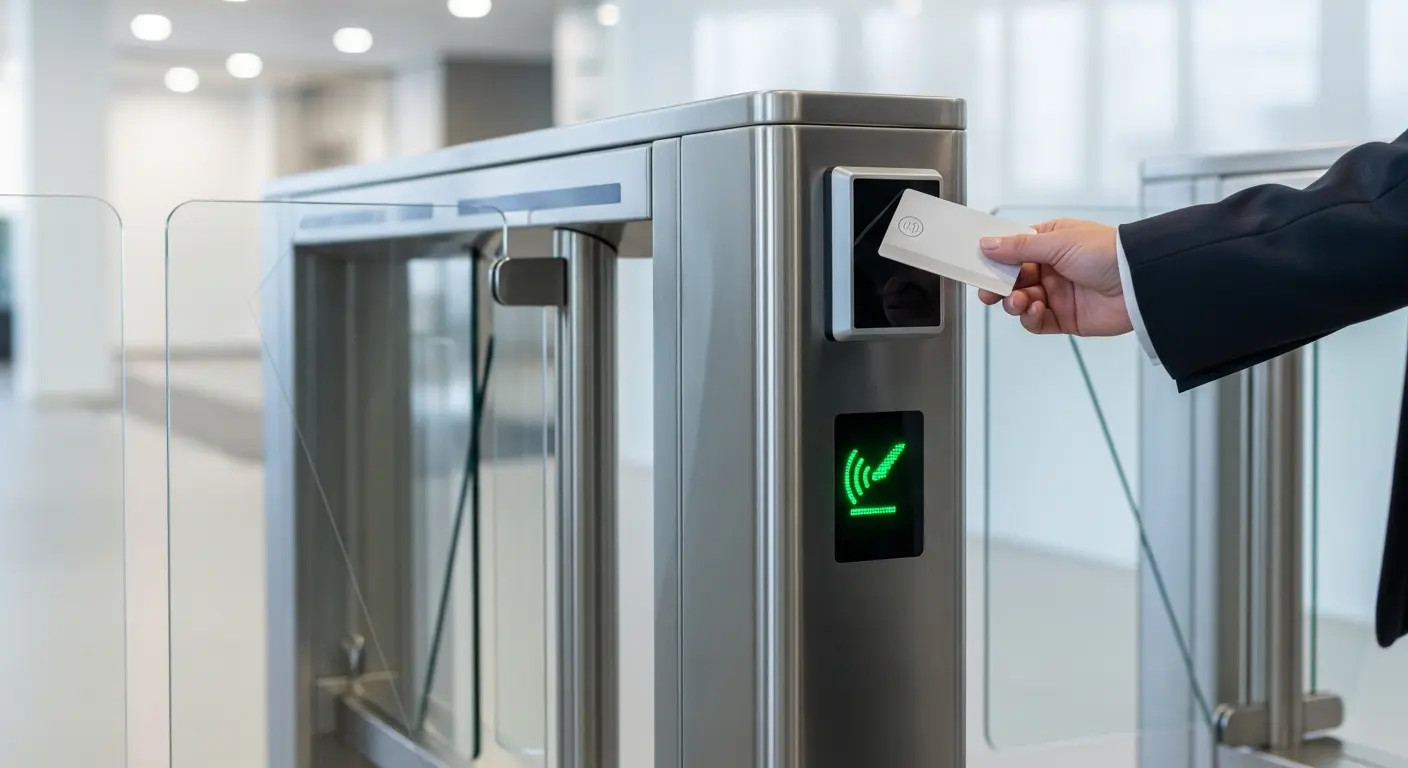
EenDraaipoort met RFID is een gemotoriseerde voetgangersbarrière uitgerust met een radiofrequentie-identificatielezer die de autorisatie van de legitimatie controleert en het passeren regelt. RFID-inloggegevens zijn verkrijgbaar in de vorm van toegangspassen, Sleutelhangers, polsbandjes, of NFC-compatibele mobiele apparaten — allemaal met een ingebouwde RFID-chip die draadloos communiceert met de lezer op de poortkast.
De lezer zendt een continu radiofrequentiesignaal uit binnen zijn leesbereik. Wanneer een RFID-inloggegevens dat veld binnenkomen, Het signaal voedt de chip (De meeste inloggegevens zijn passief — ze bevatten geen batterij) en een reactie triggert. De chip zendt een unieke identificatiecode terug naar de lezer. De lezer stuurt die code door naar een toegangscontroller, die het vergelijkt met een database van geautoriseerde gebruikers. Als de code overeenkomt en de toegangsregel wordt voldaan, De controller opent de poort.
Bekijk de IronmanRFID-kaart draaihek Zie hoe RFID is ingebouwd in het huidige productaanbod naast ondersteuning voor multi-credential readers. De IronmanToegangscontrolepaneel behandelt de verificatiestap — opslaan tot 45,000 Gebruikersgegevens, Anti-passback-logica parallel draaien, en logging tot en met 21,000 lokale evenementen voor offline veerkracht.
Hoe een draaihek met RFID de toegang verwerkt
De gebruikerservaring ziet er direct uit. Achter die reactie, Op elke afzonderlijke credentialpresentatie wordt een gedefinieerde vierstapsreeks uitgevoerd.
Stap 1 — Credential komt in het leesveld. De lezer zendt een radiofrequentiesignaal uit op een vast bereik. Op het moment dat een RFID-inloggegevens dat veld binnenkomt, Het signaal activeert de passieve chip in de kaart of FOB — geen batterij, Geen knopdruk nodig.
Stap 2 — Chip zendt zijn unieke ID-code uit. De geactiveerde RFID-tag stuurt zijn unieke identificatienummer terug naar de lezer. Deze code wordt bij de productie toegewezen. In versleutelde hoogfrequente kaarten, Deze transmissie is beveiligd tegen onderscheppings- en herhalingsaanvallen.
Stap 3 — De controller voert de autorisatiecontrole uit. De lezer stuurt het ID-nummer door naar het toegangscontrolepaneel. Het panel vergelijkt de code met de opgeslagen permissielijst, controleert de toegangsregels voor het tijdstip van de dag, en bevestigt zone-niveau autorisatie — allemaal binnen milliseconden.
Stap 4 — Gate reageert. Een goedgekeurde match activeert een open commando naar de gate-motor. De barrière opent voor een gedefinieerd venster, Meestal drie tot vijf seconden. Een afgewezen verzoek houdt de barrière gesloten en registreert de poging met een tijdstempel en een credential-ID.
De volledige cyclus — van het inlogeerblad tot het openen van de poort — wordt voltooid in de onderstaande fase 500 milliseconden voor de meeste poorten met RFID. In omgevingen met veel drukte, zoals het binnenrijden van het openbaar vervoer of de ochtendspits op kantoor., Die reactietijd is snel genoeg om het ritme van de lane te behouden zonder zichtbare wachtrijopbouw.
Uitleg over RFID-frequentie en kaarttypes
RFID is geen enkele technologie. De frequentie waarop je lezer werkt, bepaalt welke kaarten ermee werken, Hoe veilig het kwalificatiebewijs is, en hoe lang het leesbereik zich uitstrekt. Dit is het gedeelte dat de meeste kopers overslaan — en het is het gedeelte dat het meeste spijt veroorzaakt bij het bestellen.
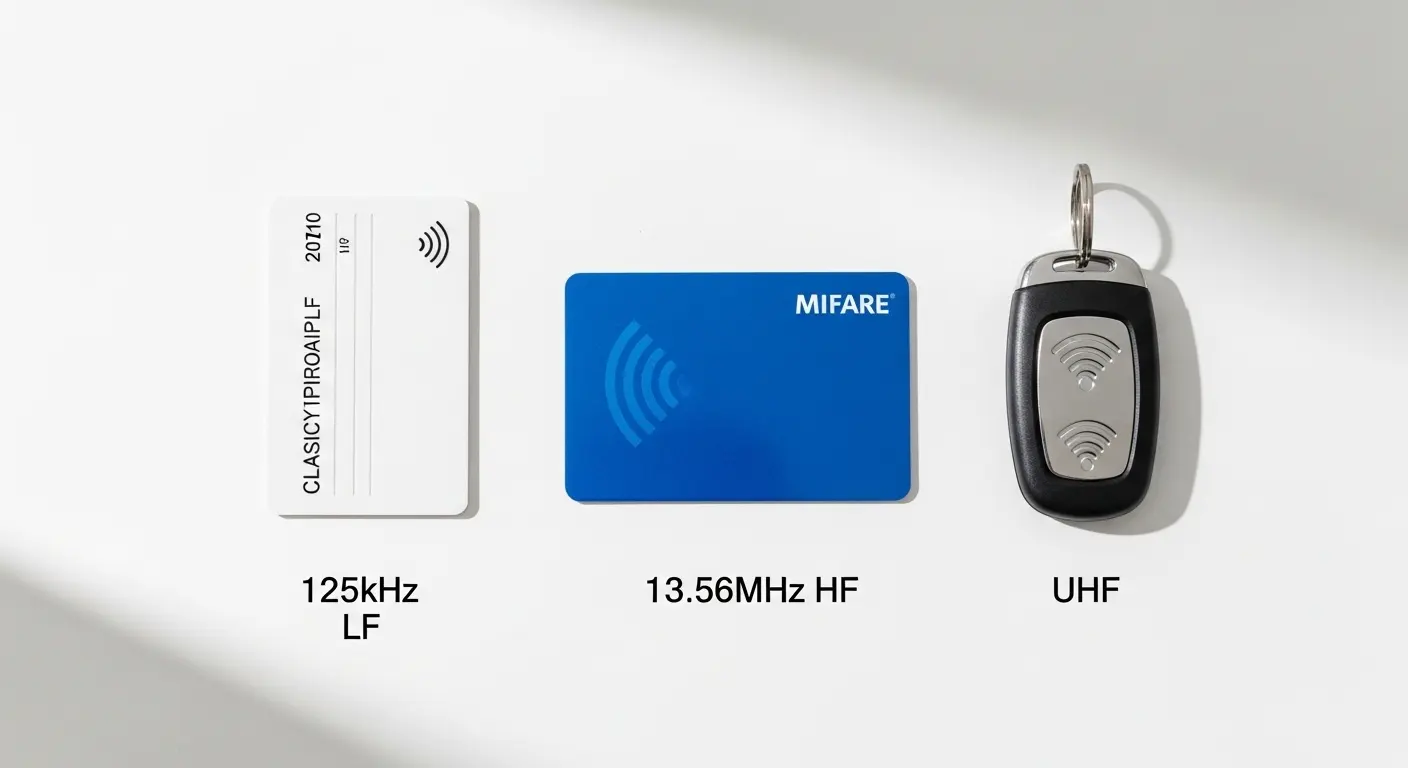
125kHz Lage Frequentie (LF) RFID
De oudste en meest basale commerciële RFID-standaard. Kaarten in deze reeks zijn onder andere EM4100, HID Nabijheid (HID Prox), en T5577 herschrijfbare formaten. Het leesbereik is typisch 5 tot 10 cm, en het ID-nummer wordt in platte tekst verzonden zonder versleuteling.
De kritieke beperking: 125kHz-kaarten kunnen worden gekloond met standaard hardware die onder de kosten van $50. Voor elke nieuweDraaipoort met RFID installatie, LF-kaarten worden niet aanbevolen tenzij achterwaartse compatibiliteit met een legacy geïnstalleerd systeem vereist is. De kostenbesparing per kaart compenseert de blootstelling aan de beveiliging niet.
13.56MHz Hoogfrequentie (HF) RFID
De huidige industriestandaard voor commercieel, Institutionele, en inzet in transit. Kaarten in deze reeks zijn onder andere Mifare Classic, Mifare DESFire EV2/EV3, HID iClass, en ISO 15693-conforme formaten. Het leesbereik strekt zich uit tot 5 tot 15 cm, en gegevensoverdracht ondersteunt encryptie.
Mifare DESFire EV3 met AES-128-encryptie is momenteel de sterkste aanbeveling voor nieuwe projecten. Het weerstaat kloonaanvallen van alle tegenstanders behalve de meest geavanceerde tegenstanders en ondersteunt wederzijdse authenticatie tussen kaart en lezer — wat betekent dat geen van beide partijen een nep accepteert. Voor de overgrote meerderheid van mijn ambten, campus, en transitomgevingen, DESFire EV3 biedt de juiste balans tussen veiligheid, kosten, en systeemcompatibiliteit.
UHF RFID (860–960MHz)
UHF-lezers ondersteunen leesbereiken van 1 Aan 12 Meter. Voor standaard voetgangersDraaipoort met RFID Rijstroken, UHF is niet de gebruikelijke keuze — de lange afstand loopt het risico dat je inloggegevens van gebruikers in aangrenzende banen leest, het creëren van valse autorisaties. UHF is zeer geschikt voor voertuigtoegangspunten, Magazijnpoortbeheer, en specifieke voetgangersomgevingen waar langeafstandsdetectie een bewuste ontwerpvereiste is.
Typen draaihekken die werken met RFID
Elke grote poort ondersteunt RFID-gegevens lezen. Het poorttype bepaalt de doorvoersnelheid, Fysiek beveiligingsniveau, en milieugeschiktheid.
Tripod Draaikruis
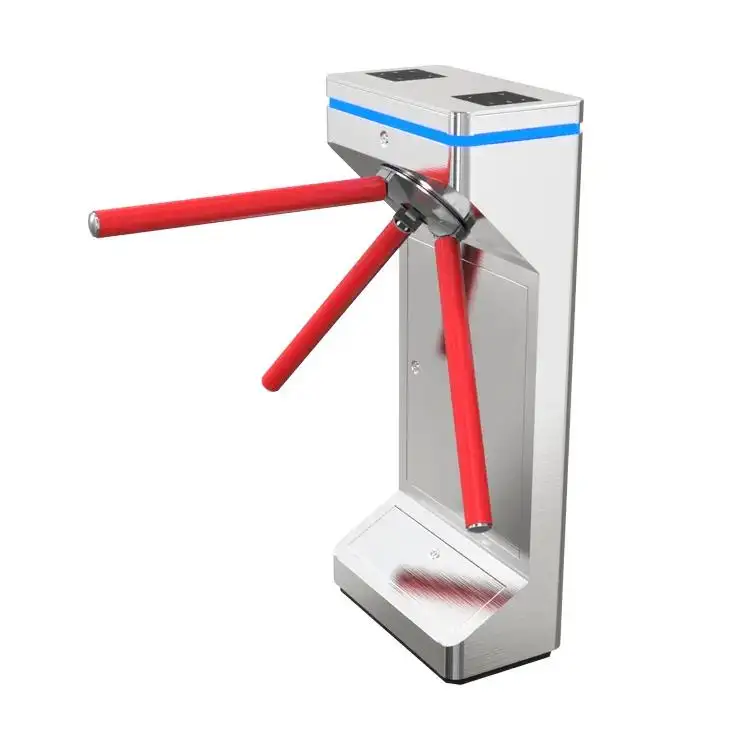
De meest compacte en kosteneffectieveDraaipoort met RFID Beginpunt. DeAutomatische driepoot-draaipoort Bevestigt een RFID-lezer direct op de kast, handgrepen tot en met 25 Personen per minuut, en geschikt voor omgevingen met middelhoge beveiliging — fabrieken, Fitnesscentra, Gemeenschapsvoorzieningen, en algemene toegang gebouwen.. De kleinere footprint maakt het gemakkelijk om het in smalle gangen of bestaande ingangen met beperkte vloeroppervlakte te plaatsen.
Flap Barrièrepoort
De flap barrier is het meest gebruikte poorttype in bedrijfs-RFID-implementaties. Doorvoerbereik 40 Aan 45 Personen per minuut, Breedbaanconfiguraties bieden ruimte voor tassen en mobiliteitshulpmiddelen, en multi-beam infraroodsensoren voeren anti-tailgating detectie uit naast RFID-verificatie — beide lagen werken gelijktijdig op dezelfde gate-hardware.
Swing Gate met RFID
Draaipoorten bedienen ADA-conforme rijstroken en bezoekersbeheerzones. Dedraaihek met RFID ondersteunt zowel standaard RFID-kaarten als multi-credential lezerconfiguraties. De borstelloze servomotor draait stil in omgevingen met continu dagelijks gebruik, en de brede rijstrookoptie is geschikt voor rolstoelgebruikers, Apparatuurwagens, en oversized tassen.
Snelheidspoort en optisch draaihek
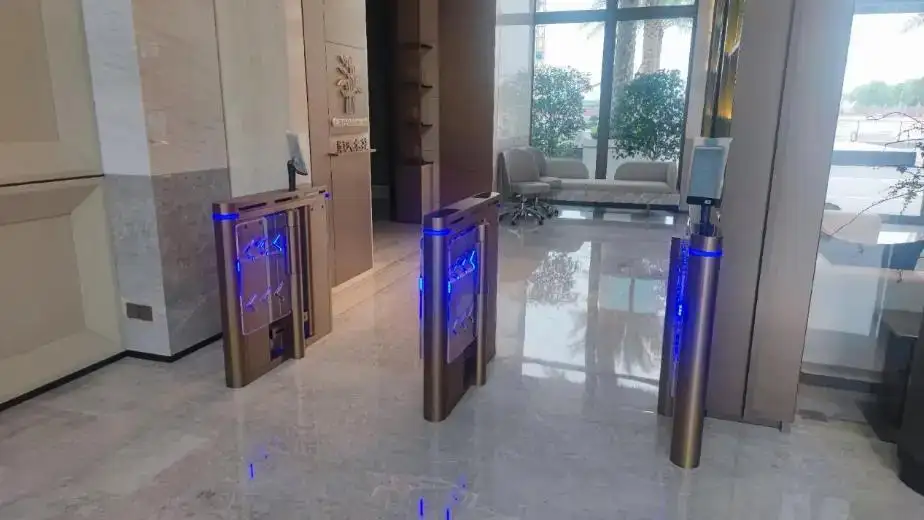
Snelheidspoorten combineren hoge doorvoer met premium esthetiek en volledige compatibiliteit met RFID-lezers. DeOptische draaipoort past bij institutionele lobby's, Transit-ingangen, en hoofdkwartiergebouwen waar zowel het uiterlijk als de snelheid van doorgang van belang zijn. DeSlimme snelheidspoort draaipoort ondersteunt RFID naast biometrische en QR-lezermodules in dezelfde kast — wat je de huidige RFID-credential geeft en een schone upgraderoute naar mobiele of biometrische credentials zonder de gate-hardware te vervangen.
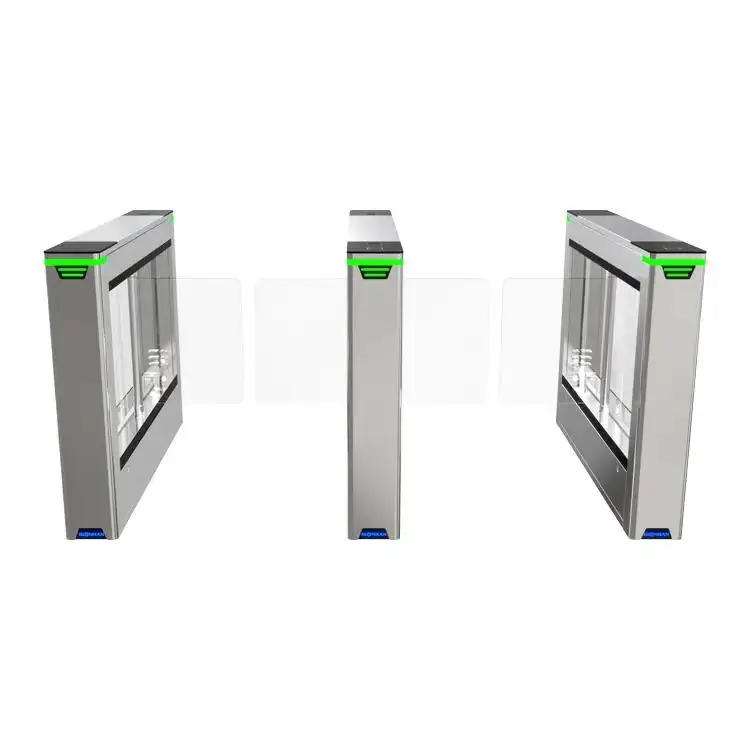
Voor omgevingen met premium architecturale eisen, deglazen schuifpoort draaihek combineert gehard glas panelen, 8-Dekking van paar-infraroodsensoren, en bidirectionele RFID-autorisatie in een vormfactor die past bij modern interieurontwerp zonder eruit te zien als beveiligingshardware.
Vergelijking van poorttype
| Poorttype | RFID-doorvoer | Beveiligingsniveau | Beste omgevingen |
|---|---|---|---|
| Tripod draaipoort | Tot 25 ppm | Gematigd | Fabrieken, Sportscholen, scholen |
| Flapbarrière | Tot 45 ppm | Hoog | Hoofdkantoor, Campussen |
| Draaihek | Tot 30 ppm | Gemiddeld tot Hoog | ADA-rijstroken, Bezoekerszones |
| Snelheid / Optische poort | Tot 50 ppm | Hoog | Transit, Premium lobbies |
| Glazen schuifdeur | Tot 40 ppm | Hoog | Financiële kantoren, VIP-gebieden |
RFID versus RFID versus. Andere soorten toegangsbewijs op een draaihek
RFID blijft het wereldwijde standaardinlogificatie voor draaihekimplementaties, Maar het is niet altijd de juiste primaire keuze. Door de afwegingen te begrijpen, kan u de beste optie — of de beste combinatie — voor uw faciliteit specificeren.
RFID versus RFID versus. Biometrisch
RFID-kaarten kunnen gedeeld worden, kwijt, of gekloond afhankelijk van het kaarttype. Biometrie — gezichtsherkenning, vingerafdruk, Irisscan — bevestig de fysieke identiteit direct. Voor zones met hoge beveiliging waar het delen van inloggegevens een reële bedreiging vormt, het toevoegen van biometrische verificatie als secundaire laag naast RFID zorgt voor aanzienlijk sterkere identiteitsgarantie. Kaartuitgifte en vervangingskosten verdwijnen volledig met biometrie, hoewel de hardwarekosten per lezer hoger zijn.
RFID versus RFID versus. QR-code en barcode
QR- en barcode-inloggegevens passen bij roterende bezoekerspopulaties waar pre-inschrijving onpraktisch is — stadions, Gebeurtenissen, Transitticketing, tijdelijke toegang voor aannemers. RFID-pakken stabiel, langdurige gebruikerspopulaties waarbij inloggegevens eenmaal worden uitgegeven en in de loop van de tijd worden beheerd. Voor faciliteiten met beide populaties, RFID verwerkt regelmatige gebruikers en QR verwerkt bezoekers, waarbij beide lezertypes vaak op dezelfde gatekast zijn gemonteerd.
RFID versus RFID versus. Mobiele inloggegevens (BLE/NFC)
Moderne multi-technologie lezers verwerken zowel HF RFID-kaarten als NFC mobiele inloggegevens op dezelfde hardware. RFID-kaarten blijven sterker in omgevingen waar smartphonebeheer onpraktisch is: Productievloeren met geen telefoonbeleid, Grote evenementen met grote apparaatvariatie, of transitomgevingen waar de betrouwbaarheid van NFC varieert per apparaatmodel.
RFID blijft de juiste primaire keuze wanneer:
- Je gebruikerspopulatie is stabiel en gemakkelijk om fysieke kaarten uit te geven bij onboarding
- Uw systeem moet samenwerken met de bestaande RFID-infrastructuur
- Je wilt beheerdersgestuurde intrekking van inloggegevens op grote schaal zonder afhankelijk van gebruikersapp-apps
- Je omgeving omvat gebruikers zonder betrouwbare smartphonetoegang
Hoe kies je de juiste draaipoort met RFID
Vijf factoren moeten je beslissing bepalen. Werk elk van deze dingen door voordat je productspecificaties vergelijkt.
1. Verkeersvolume
Begin met je doorvoervereiste voor de piekuren. Een statief kan tot 25 Personen per minuut. Flappenvangers en snelheidspoorten reiken 40 Aan 50. Bereken je drukste 15-minutenvenster — niet je dagelijkse gemiddelde — en koppel het gatetype aan dat getal.
2. Beveiligingsniveau
Zones met hogere beveiliging hebben 13,56MHz HF RFID nodig met versleutelde kaarten (DESFire EV3 of HID iClass) en multi-beam anti-tailgating detectie die naast credentialverificatie loopt. Zones met lagere beveiliging kunnen Mifare Classic of basis HF-kaarten met eenvoudigere sensorconfiguraties draaien.
3. Lees Bereik Nodig
Standaard voetgangerspaden werken bij 5 tot 15 cm leesbereik. In transitomgevingen waar gebruikers tassen over zakken dragen of poorten naderen zonder te vertragen, Een breder bereik-lezer vermindert het fouten van het aftapen van inloggegevens en de aarzeling van de rijstrook aanzienlijk.
4. Beheer van meerdere locaties en meerdere gebouwen
Als toegangsrechten beheerd moeten worden over meerdere gebouwen of locaties, specificeer een controller met TCP/IP-connectiviteit en compatibiliteit met cloudbeheer. De IronmanToegangspoortpoortoplossingen De pagina behandelt multi-site controller-instellingen in detail. Bekijk het volledige boekDraaihek Productassortiment om multi-site compatibiliteit voor elk model te bevestigen.
5. Toekomstig upgradepad
Specificeer een gatekast met modulaire of multi-technologie lezersleuven. Wanneer uw faciliteit klaar is om biometrische of mobiele credentialondersteuning toe te voegen, De poorthardware blijft op zijn plaats — alleen de lezermodule verandert. Deze beslissing in de specificatiefase kan de volledige vervangingskosten van een volledige poortinstallatie binnen vijf jaar besparen.
Veelvoorkomende fouten bij het specificeren van een draaipoort met RFID
Het specificeren van 125kHz laagfrequente kaarten voor een nieuwe installatie. LF-kaarten kunnen worden gedupliceerd met basistools die online beschikbaar zijn. Voor elke nieuweDraaipoort met RFID project, begin met Mifare DESFire EV3 of HID iClass als minimale kaartbeveiligingsspecificatie. Het verschil per kaart tussen LF en HF is klein. Het verschil in beveiliging is dat niet.
De RFID-lezer op de verkeerde hoogte monteren. De montagehoogte van de lezer beïnvloedt direct het dagelijkse tapcomfort en het aantal fouten bij het lezen van de inloggegevens. Standaardpraktijk is 90 cm tot 100 cm vanaf vloerniveau voor volwassen gebruikers. In gemengde leeftijdsomgevingen — scholen, Gemeenschapsgebouwen — Test de werkelijke montagehoogte met een dwarsdoorsnede van echte gebruikers voordat de installatie wordt afgerond. Een consistente 10% Het falingspercentage van de tap door een slechte montagehoogte verandert in een aanzienlijk dagelijks wachtrij- en helpdeskprobleem.
Kabelspecificaties negeren. RS485-communicatie tussen RFID-lezer en controller werkt over lange periodes, maar verslechtert in elektrisch lawaaierige omgevingen met slechte kabelkwaliteit. Gebruik speciale afgeschermde kabels en test de communicatiestabiliteit onder echte bedrijfsomstandigheden tijdens de ingebruikname — niet alleen in de stilte van een leeg gebouw.
RFID behandelen als de enige beveiligingslaag. Een enkele RFID-kaartcontrole bevestigt dat er een geldige kaart aanwezig is. Het bevestigt niet dat de juiste persoon het vasthoudt. Voor elke zone waar het delen van inloggegevens een realistisch risico is, koppel RFID met een secundaire factor — biometrische verificatie, Anti-passback handhaving op controllerniveau, of een pincode secundaire controle voor streng beveiligde rijstroken.
FAQ: Draaihek met RFID
Wat is een draaipoort met RFID?
EenDraaipoort met RFID is een gemotoriseerde voetgangerstoegangsbarrière uitgerust met een radiofrequentie-identificatielezer. Wanneer een gebruiker een RFID-kaart presenteert, Fob, of NFC-apparaat, De lezer activeert de ingebouwde chip van de inloggegevens, haalt zijn unieke ID-code op, stuurt deze door naar een toegangscontroller voor databaseverificatie, en opent de poortbarrière als de autorisatie wordt bevestigd. De volledige cyclus wordt voltooid in minder dan 500 Milliseconden.
Welk type RFID-kaart is het beste voor een draaideurpoort?
Voor nieuwe installaties, 13.56MHz High Frequency-kaarten — specifiek Mifare DESFire EV3 of HID iClass — zijn de huidige aanbevolen standaard. Ze ondersteunen versleutelde datatransmissie en weerstaan kloonaanvallen die oudere 125kHz Low Frequency-kaarten gemakkelijk omzeilen. DESFire EV3 met AES-128-encryptie is de sterkste specificatie voor omgevingen met echte beveiligingsvereisten voor inloggegevens.
Welk type draaipoort werkt het beste met RFID?
Flap barrièrepoorten zijn het meest ingezetDraaipoort met RFID configuratie voor bedrijfs- en campusomgevingen omdat ze hoge doorvoer combineren (tot en met 45 Personen per minuut), Breedbaanscapaciteit, en detectie van anti-tailgating sensoren op één platform. Snelheidspoorten zijn de premium optie voor drukbezocht of architectonisch veeleisende omgevingen. Driepoot-draaipoorten dienen toepassingen met minder volume of minder beveiliging tegen een praktischer kostenpunt.
Kan een draaipoort zowel RFID- als biometrische inloggegevens ondersteunen??
Ja. De meeste moderne gate-kasten bevatten multi-technologie lezersleuven die tegelijkertijd RFID- en biometrische modules accepteren. Dit maakt RFID mogelijk voor algemene dagelijkse gebruikers en biometrische verificatie voor zones met hoge beveiliging — beide werken op dezelfde fysieke gatehardware, waarbij de poort de inlogcombinatie aanstuurt op basis van zone-niveau instellingen in de toegangscontroller.
Hoe ver werkt een RFID-lezer op een draaipoort?
Het leesbereik hangt af van de RFID-frequentie en de hardware van de lezer. Standaard 13,56MHz HF-lezers op draaideuren werken op 5 tot 15 cm. UHF-lezers voor specifieke langeafstandsopstellingen ondersteunen 1 Aan 12 Meter. Voor standaard voetgangersrijstroken, 5 tot 15 cm is het praktische bereik dat voorkomt dat gebruikers per ongeluk lezen in aangrenzende rijstroken lezen, terwijl het toch soepel blijft, Presentatie van de natuurlijke bevoegdheid.
