


Veiligheidssensoren van de draaipoort: Hoe ze werken, Wat ze detecteren, en Waarom ze belangrijk zijn
2026-03-16


Veiligheidssensoren van de draaipoort zijn de onzichtbare laag van intelligentie binnen elke moderne voetgangersbarrière — en ze doen veel meer dan de meeste kopers beseffen. Ze detecteren niet alleen wanneer iemand erdoorheen loopt. Ze onderscheiden één gemachtigde persoon van een tailgater, Voorkomen dat panelen een gebruiker midden in de doorgang knijpen, Detectiepogingen tot omgekeerde intrusie detecteren, en stuur realtime alarmsignalen naar beveiligingsbeheerplatforms.
Als je specificeert, Aankoop, of het onderhouden van poorten met draaipoorten, Begrijpen hoe veiligheidssensoren werken is wat een goed geconfigureerde installatie onderscheidt van een installatie die valse alarmen genereert, verwondt gebruikers, of laat ongeautoriseerde toegang onopgemerkt blijven.
Wat zijn veiligheidssensoren voor draaipoorten?
Veiligheidssensoren van de draaipoort zijn elektronische detectiesystemen die in de rijstrookbehuizing van een draaipoort zijn ingebouwd — boven, langszij, en over het doorgangskanaal. Ze werken met infrarood (EN) Lichtbundels die worden verzonden tussen zender- en ontvangerparen die aan tegenovergestelde zijden van de baan zijn gemonteerd.
Wanneer een bundel wordt onderbroken — door een persoon, Een ledemaat, Een tas, of welk fysiek object dan ook — de sensor meldt die onderbreking aan het bedieningspaneel van de poort (PCB). De PCB interpreteert vervolgens het patroon van onderbrekingen over alle sensorparen en neemt een beslissing: Open de Lane, Hou het dicht, Activeer een alarm, of het paneel niet te sluiten.
Het sleutelwoord ispatroon. Een enkele persoon die erdoorheen loopt, creëert één specifieke reeks straalonderbrekingen — sequentieel, Directionele, en consistent met een enkellichaamprofiel. Twee mensen die elkaar op de voet volgen creëren een ander patroon — overlappende onderbrekingen die het tijdsprofiel van één persoon overstijgen. De sensorlogica maakt onderscheid tussen deze.
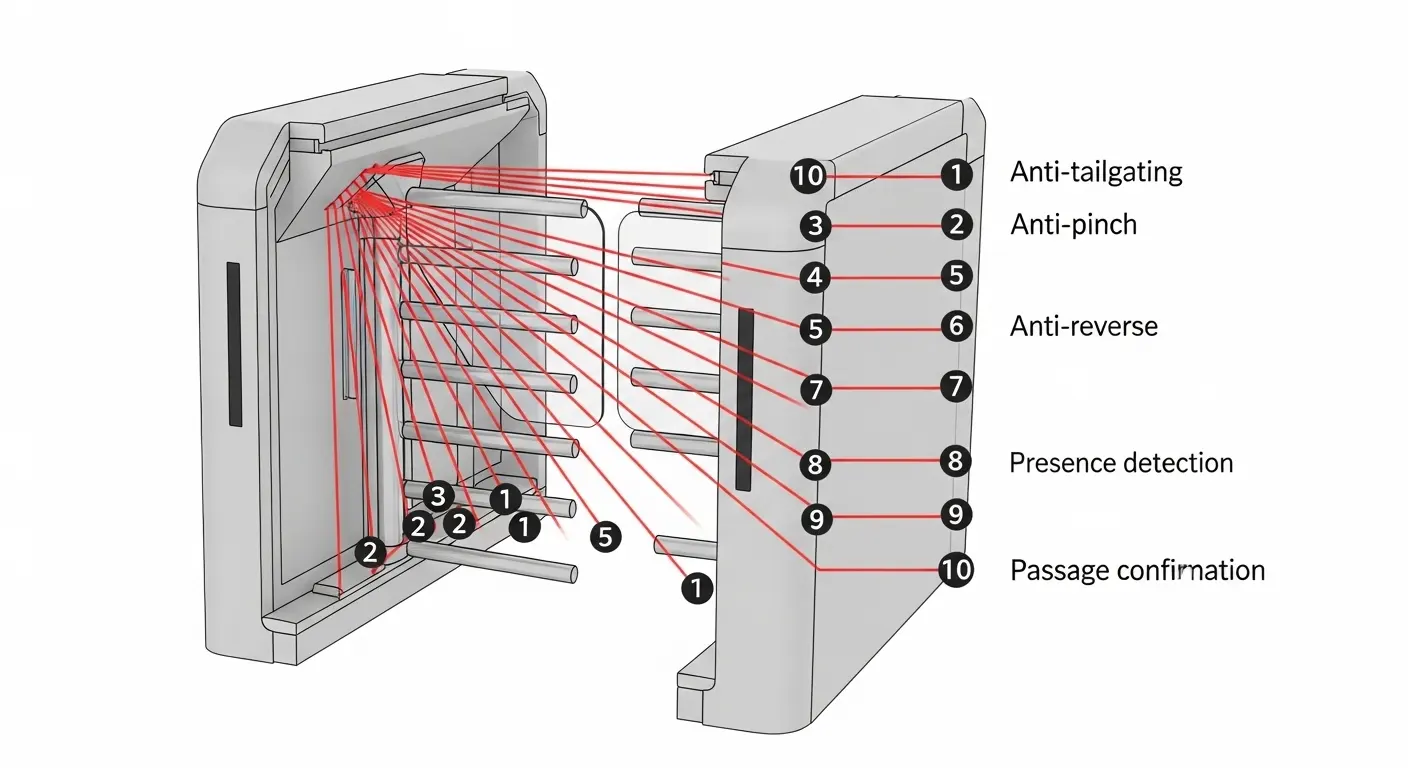
Moderne veiligheidssensoren voor draaipoorten vallen doorgaans in vijf functionele categorieën: Anti-tailgating detectie, Anti-knijpbescherming, Anti-reverse detectie, Aanwezigheidsdetectie, en bevestiging van passage. Elk vervult een eigen rol.
De vijf typen veiligheidssensoren voor draaideuren
1. Anti-tailgating infraroodsensoren
De primaire beveiligingssensor in elke draaipoort. Meerdere infraroodbundelparen zijn in een array gerangschikt over de volledige doorgangsdoorsnede. Elk bundelpaar bevindt zich op een andere hoogte — meestal 160 mm tot 1.000 mm boven vloerniveau — waardoor een verticale detectiegordijn ontstaat in plaats van een enkele lijn.
Wanneer een geldig certificaat wordt getoond, De poort opent voor een eenpersoonsdoorgang. De sensorarray houdt de gehele doorgangszone gedurende die cyclus in de gaten. Als straalonderbrekingspatronen aangeven dat een tweede persoon binnen dezelfde cyclus volgt — overlappende onderbrekingen in plaats van sequentiële enkellichaamonderbrekingen — activeert de controller onmiddellijk een alarm, vergrendelt het paneel opnieuw (indien mogelijk midden in de swing), en registreert het evenement.
Volgens de gepubliceerde specificaties van Gteksensor, Geavanceerde infraroodlichtgordijnsensorarrays bereiken een maximale detectieafstand van 8 m en een minimale detectiehoogte van 160 mm — en dekken de volledige doorgangszone van vloerniveau tot bovenromp zonder dode zones.
2. Anti-knijpen Veiligheidssensoren
Anti-knijpsensoren beschermen gebruikers tegen een geraakt paneel of het worden geraakt door een sluitpaneel. Er zijn twee methoden: infrarood anti-knijpen en mechanische anti-knijpen.
Infrarood anti-knijp gebruikt sensorparen die dicht bij de paneelrand zijn geplaatst. Als een straal een obstructie detecteert terwijl het paneel in sluitende beweging is, De controller stopt onmiddellijk de motor en draait de richting van het paneel om — waardoor de obstructie wordt losgelaten voordat de contactkracht meer dan 2 kg overschrijdt (De veiligheidsdrempel die wordt toegepast in de meeste commerciële bouwnormen).
Mechanische anti-knijpen gebruikt een elektromagnetische koppeling. Als het paneel bij het sluiten weerstand bereikt boven een ingestelde krachtdrempel, De koppeling schakelt los en het paneel stopt zonder dat er een sensorsignaal nodig is. Deze methode wordt gebruikt in cilindrische snelheidspoorten waarbij de interne kolomruimte te klein is om een infraroodsensorarray naast het aandrijfmechanisme te plaatsen.
3. Anti-reverse detectiesensoren
Anti-achteruitersensoren voorkomen dat iemand door een draaipoort in de verkeerde richting loopt — via de afritstrook of via de inrijstrook zonder geldig inlogbrijbewijs. De sensorarray monitort de volgorde van bundelonderbreking. Een legitieme enkelrichtingspassage genereert een in- tot uitgangsreeks van bundelonderbrekingen. Een omgekeerde passage genereert een uitgang-naar-intree-sequentie. De controller identificeert de richtingsmismatch en activeert onmiddellijk een alarm en vergrendeling.
4. Aanwezigheidsdetectiesensoren
Aanwezigheidsdetectiesensoren bevestigen dat de rijstrook vrij is voordat de volgende overdrachtsronde van het legitimatiebewijs kan beginnen. Ze voorkomen dat de poort opengaat terwijl de vorige gebruiker nog binnen het doorgangskanaal is — wat een mogelijkheid zou creëren om alleen door timing te volgen in plaats van fysiek te volgen.
5. Sensoren voor doorgang
Sensoren voor doorgang detecteren de afrit van de bevoegde gebruiker uit de rijstrook en activeren de hersluitingssequentie van het paneel. Zonder bevestigd uitgangssignaal, Het paneel wacht in de open positie voor een instelbare time-out periode voordat het wordt gesloten — waardoor valse alarmen bij langzaam bewegende gebruikers worden verminderd, Rolstoelgebruikers, of gebruikers met bagage.
Hoeveel sensorparen heeft elk poorttype nodig?
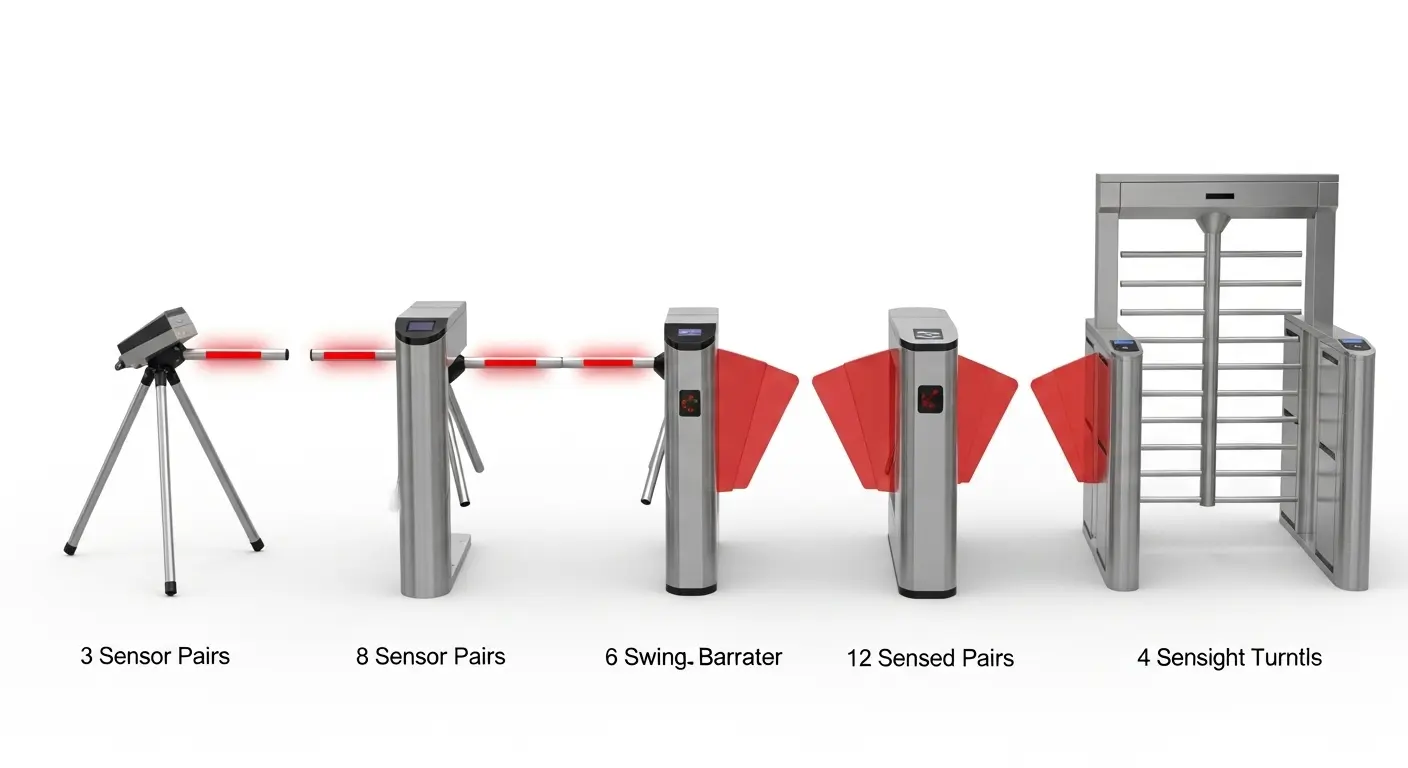
Het aantal sensorparen is een van de belangrijkste — en meest inconsistent gespecificeerde — parameters in de markt voor veiligheidssensoren van draaipoorten. Het minimum varieert per poorttype:
| Poorttype | Minimale sensorparen | Aanbevolen | Waarom |
|---|---|---|---|
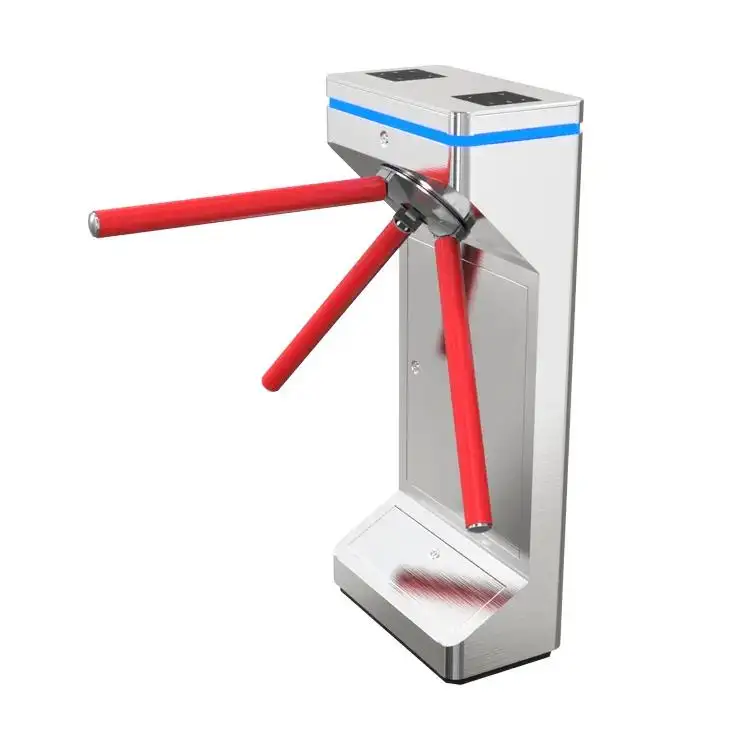
| Tripod Draaikruis | 2 Paren | 4–6 paren | Lage paneelhoogte betekent een beperkte detectiezone; Meer paren verminderen dode zones |
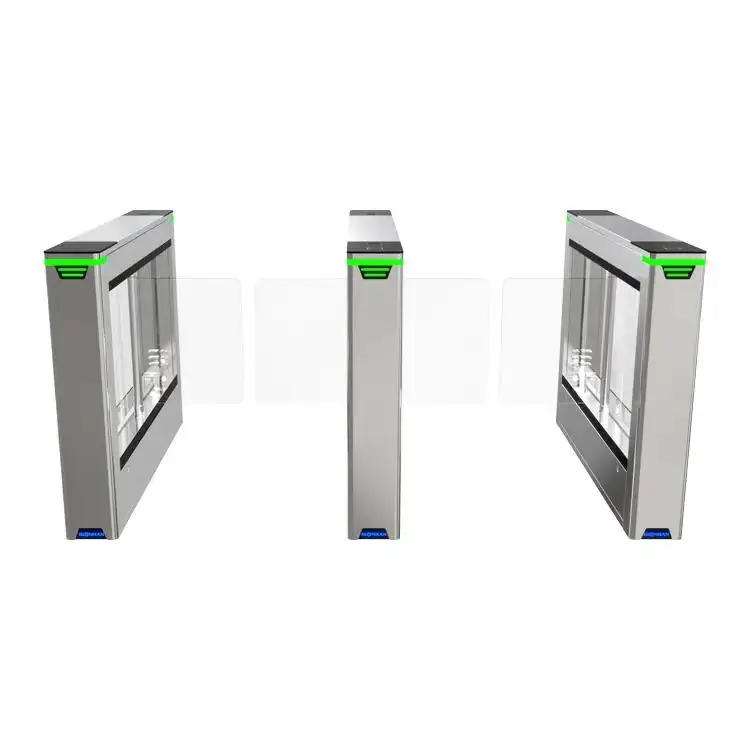
| Flap Barrière | 6 Paren | 8–12 paren | Sluitsnelheid van brede glazen panelen vereist volledige zonedekking voor anti-knijpen |
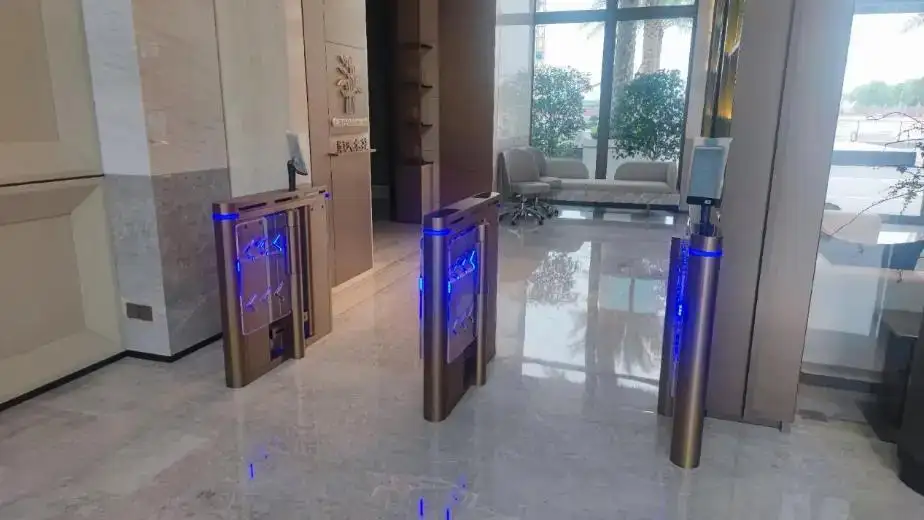
| Swing Barrier Gate | 6 Paren | 8–12 paren | Brede rijstrook + De swingboog creëert complexere detectiegeometrie |
| Snelheidspoort | 8 Paren | 10–16 paren | Hoge doorvoer (50–80 ppm) vereist de snelst mogelijke detectierespons |
| Draaideurje op volle hoogte | 4 Paren | 6–8 paren | Omleidingsroutes met afgesloten kanaalgrenzen; Anti-reverse is de primaire behoefte |
Voor draaihekken met schand- en flap, het minimum is minstens 3 paren per kanaal volgens de gepubliceerde bedradingspecificatie van Elefire Tech. In de praktijk, 6–12 paren zorgen voor aanzienlijk betere nauwkeurigheid bij tailgatingdetectie en verminderen het aantal valse alarmen in praktijk met gebruikers die grote tassen dragen, Trolleys, of in paren bewegen.
Een gekwalificeerdeFabrikant van draaihekken Publiceert het aantal sensorparen en de positionering van de bundelhoogte in het productspecificatieblad — niet zomaar een vage "met sensoren" Opmerking in de lijst met functies. Als deze gegevens ontbreken, Vraag het aan voordat je bestelt.
Sensorlogica: Hoe de controller sensorsignalen interpreteert
Inzicht in sensorlogica verklaart waarom de ene poort constant valse alarmen genereert terwijl een andere honderden dagelijkse passes verwerkt zonder een enkel foutief alarm:
De besturingsbord voert signaaltiminganalyse uit op elk sensorpaar gelijktijdig. Het vergelijkt het patroon van bundelonderbrekingen met een set vooraf gedefinieerde doorgangsprofielen die in firmware zijn opgeslagen:
- Profiel 1 (Geldige eenpersoonspas): Instapstraal als eerste onderbroken, Sequentiële uitgangsbundel onderbroken na, Geen gelijktijdige multi-beam overlap, Afgerond binnen het inlogatievenster
- Profiel 2 (Tailgatingpoging): Meervoudige bundeloverlap treedt op — twee of meer bundelparen worden gelijktijdig onderbroken in een patroon dat niet overeenkomt met een enkelvoudige lichaambreedte
- Profiel 3 (Omgekeerde intrusie): De bundelonderbrekingsvolgorde loopt van uitgang naar ingang in plaats van van van in- naar uitgang
- Profiel 4 (Anti-knijp trekker): Straal onderbroken terwijl paneel in sluitbeweging is, binnen 200 mm van de paneelpositie
De kwaliteit van de firmware bepaalt hoe nauwkeurig de controller het profiel onderscheidt 1 van Profielen 2–4 onder echte omstandigheden — inclusief gebruikers die langzaam lopen, Draag brede bagage, of onvoorspelbaar bewegen. Firmware van lage kwaliteit genereert valse alarmen vanuit Profiel 2 triggers die daadwerkelijk Profiel zijn 1 Evenementen met een grote zak die achterloopt.
Voor faciliteiten die realtime toegang willen tot sensorlogboeken — individuele alarmgebeurtenissen, Aantal passages, en detectiepatroonrapporten per poort en op tijdstip van de dag — eenCloudgebaseerd draaihekbeheersysteem Deze gegevens worden weergegeven in een browserdashboard zonder dat lokale serverinfrastructuur nodig is.
Draaihek Veiligheidssensoren per Inzetomgeving
Verschillende omgevingen stellen verschillende eisen aan sensorprestaties.:
Scholen en universiteiten
Anti-pinch is de belangrijkste veiligheidszorg in onderwijsomgevingen — kinderen en tieners bewegen onvoorspelbaar en kunnen een sluitpaneel weerstaan in plaats van zich terug te trekken. Alle veiligheidssensoren van de draaipoorten bij schoolinzet moeten gebruikmaken van infrarood anti-knellen met een contactkrachtdrempel onder de 2 kg. Voor een gedetailleerd overzicht van de sensorvereisten voor onderwijsinstellingen, deDraaihekoplossingen voor scholen en universiteiten de pagina behandelt zowel sensorspecificaties als credentialconfiguraties die geschikt zijn voor toegang tot studenten-ID en QR-codes.
Transitstations en drukbekwame knooppunten
Piekperiodes genereren honderden opeenvolgende passages. Sensorresponstijd van minder dan 50 ms per bundelpaar is vereist om een doorvoersnelheid van 40–60 ppm te behouden zonder dat de controller achterblijft bij de fysieke doorgangssnelheid. Hoge aantal sensorparen (10–16 paren) zijn noodzakelijk om detectiedode zones te vermijden tijdens het burstverkeer dat plaatsvindt in de 60 seconden voor vertrek van de trein.
Bedrijfskantoren en overheidsgebouwen
Anti-tailgating-nauwkeurigheid is de primaire vereiste. DeAB-draaihek tegen tailgating gebruikt bidirectionele optische sensoren met dual-beam overlaplogica die onderscheid maakt tussen één geautoriseerde gebruiker en een dicht achter de band lopende tailgater — waarbij de anti-tailgating detectienauwkeurigheid hoger blijft 99% in gecontroleerde inzet.
Ziekenhuizen en gezondheidszorginstellingen
Infrarood anti-knijpen met mechanische backup is de aanbevolen configuratie — patiënten met mobiliteitshulpmiddelen, IV-polen, en apparatuurcarts creëren complexe obstructieprofielen die een puur softwarematig anti-pinch systeem mogelijk niet betrouwbaar afdekken. Anti-reverse detectie voorkomt dat de patiëntenstroom wordt verstoord door mensen die via de uitgangen verbode gebieden betreden,.
Stadions en evenementlocaties
Barcode- en QR-ticketvalidatie bij het evenement vereist snelle sensor-naar-credential synchronisatie. De sensor opent de rijstrook pas nadat het inloggegevens zijn gevalideerd EN de aanwezigheidssensor bevestigt dat er iemand wacht — waardoor de gate niet opengaat voor een geldige ticketscan als er niemand aanwezig is. Voor dit gebruik, eenBarcode draaipoort Model met gesynchroniseerde sensor-credentiallogica dekt zowel de ticketvalidatie als de fysieke passagedetectie in één gecoördineerde cyclus.
Hoe de sensorprestaties achteruitgaan — en hoe deze te onderhouden
Veiligheidssensoren van de draaihekpoorten falen in de meeste gevallen niet plotseling. De prestaties nemen geleidelijk af via vier mechanismen:
1. Lensvervuiling
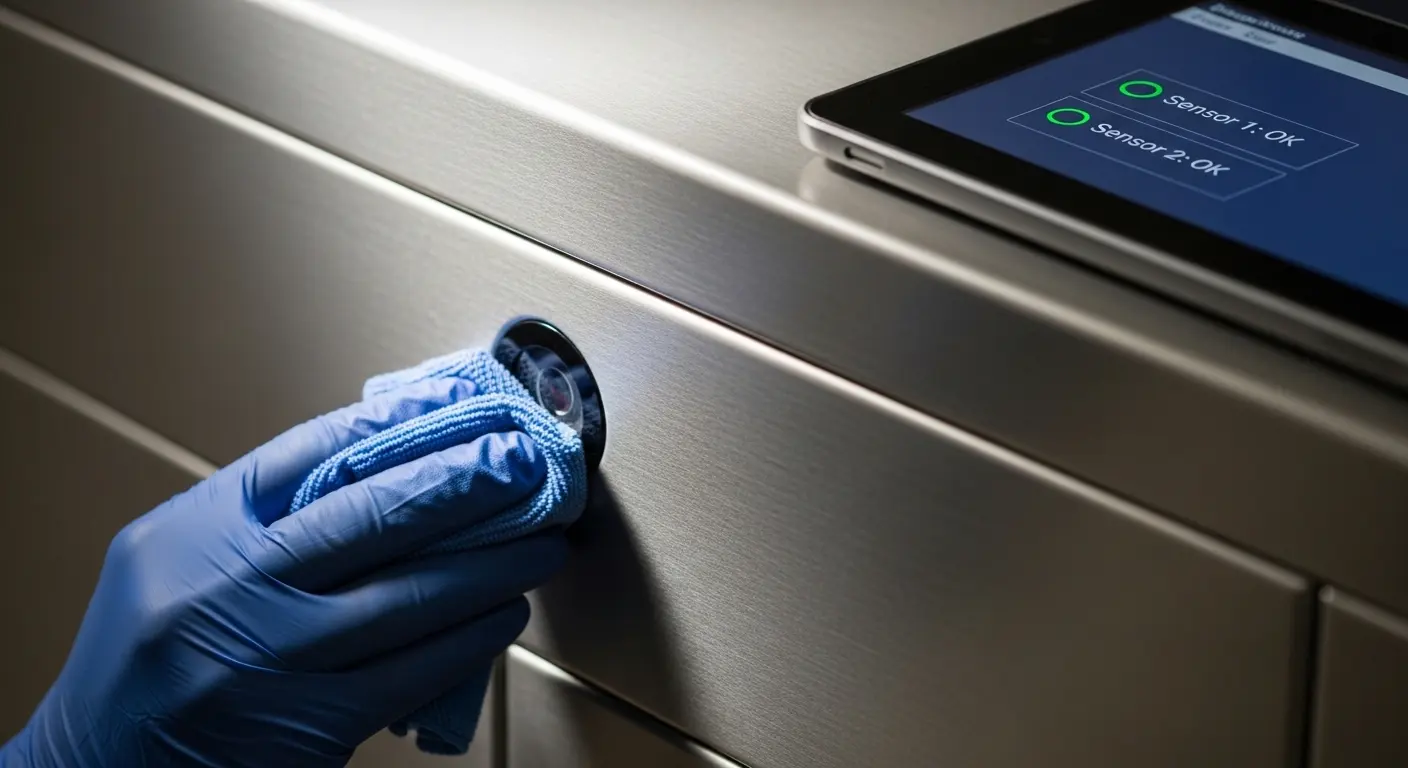
Infraroodzenders en -ontvangers bevinden zich achter kleine plastic of glazen lenzen. Stof, Vet door handcontact, en condensatie hoopt zich over maanden op en vermindert de signaalsterkte. Een besmette lens verzwakt de bundel en veroorzaakt intermitterende valse detectie- of missdetectiegebeurtenissen. Schoonmaakfrequentie: elke 30–60 dagen in drukbezocht of stoffig milieu.
2. Uitlijning van emitter/ontvanger
Fysieke trillingen door druk verkeer, Schoonmaak, of kleine botsingen kunnen geleidelijk de emitter- en ontvangerunits uit directe lijn verschuiven. Zelfs 2–3 mm misalignment op een 8-parige array kan intermitterende dode zones veroorzaken. Controleer de uitlijning bij elk gepland onderhoudsbezoek.
3. Firmware-kalibratiedrift
Detectieprofieldrempels die in firmware zijn opgeslagen, dwalen af na updates of stroomonderbrekingen af. Kalibreer de doorgangsprofielen opnieuw na elke firmware-update om te bevestigen dat de detectienauwkeurigheid overeenkomt met de fabrieksspecificaties.
4. Sensorpaarfalen
Individuele IR-paren falen na verloop van tijd. Een systeem met 8 Paren die opereren bij 6 Functionele paren presteren adequaat onder veel omstandigheden, maar creëren detectiegaten onder specifieke combinaties van lichaamsbreedte en positie.. Meest modernDraaihek Besturingsborden rapporteren de status van individuele sensorkoppels in het diagnostisch menu — controleer dit tijdens onderhoudsbezoeken in plaats van te wachten op een klacht in het veld.
Voor installaties met eenOptische snelheidspoort draaihek model met hoge sensorparen, De diagnosekaart registreert de status van individuele bundels over alle paren — waardoor het mogelijk is een defect paar te identificeren voordat het een merkbare detectiefout veroorzaakt tijdens normale werking.
Veelgestelde vragen over veiligheidssensoren van draaihekken
Q: Wat zijn veiligheidssensoren voor draaipoorten en wat doen ze?
Een: Veiligheidssensoren van de draaipoort zijn infraroodbundeldetectiesystemen die in het doorgangskanaal van een draaihek zijn ingebouwd. Ze vervullen vijf belangrijke functies: Detecteren van toegestane eenpersoonspassage, Identificatie van tailgatingpogingen, Detectie van omgekeerde intrusie, Voorkomen van paneelpinch letsels, en bevestiging van voltooiing van doorgang voordat het weer wordt gesloten. De controller interpreteert bundelonderbrekingspatronen van meerdere sensorparen gelijktijdig om deze scenario's in realtime te onderscheiden.
Q: Hoe werkt anti-tailgating detectie eigenlijk in een draaihekpoort?
Een: Anti-tailgating-sensoren gebruiken meerdere infraroodbundelparen die verticaal over de rijstrook zijn geplaatst. Een enkele persoon genereert een sequentiële in- tot uitgangspatroon van de bundel. Twee mensen die elkaar nauw volgen genereren overlappende onderbrekingen over meerdere bundelparen gelijktijdig — een patroon dat de controller identificeert als inconsistent met een enkellichaamprofiel. De controller activeert vervolgens een alarm en vergrendelt het paneel opnieuw, Stop de tailgatingpoging voordat de tweede persoon het hek verlaat.
Q: Wat is anti-knijpbeveiliging in een draaihek?
Een: Anti-knijpbeveiliging voorkomt dat het poortpaneel sluit om een persoon of object. Infrarood anti-pinch gebruikt sensorparen nabij de paneelrand — als een bundel wordt onderbroken terwijl het paneel sluit, De motor stopt onmiddellijk en keert van richting, het loslaten van de obstructie voordat de contactkracht meer dan 2 kg overschrijdt. Mechanische anti-knelling gebruikt een elektromagnetische koppeling die loskoppelt wanneer de weerstand een krachtdrempel overschrijdt — gebruikt in cilindrische snelheidspoorten waar infraroodsensoren niet in de kolom passen.
Q: Hoeveel sensorparen moet een goede draaipoort hebben?
Een: Het minimum is 3 Paren per kanaal, zoals gespecificeerd in de standaardbedrading documentatie voor swing- en flap gate-configuraties. In de praktijk, Commerciële klep- en swingbarrièrepoorten gebruiken 6–12 paren voor betrouwbare detectie van tailgating en anti-kinch dekking. Snelheidspoorten met doorvoersnelheid van 50+ PPM vereisen 10–16 paren om detectienauwkeurigheid bij hoge doorgangspercentages te behouden. Driepoot-draaipoorten werken in de meeste commerciële configuraties met 4–6 paren.
Q: Kunnen sensorgegevens van draaipoorten op afstand worden gemonitord??
Een: Ja — in cloudverbonden of netwerkbeheerde draaipoortsystemen. De besturingstafel registreert individuele sensorgebeurtenissen — alarmtriggers, Detecties van tailgating, pogingen tot omgekeerde intrusie, en anti-pinch activaties — en deze in realtime naar een centraal beheerplatform verplaatst. Facility managers kunnen toegang krijgen tot sensor-gebeurtenislogboeken, Bekijk alarmpatronen per poort en tijdstip van de dag, en het identificeren van defecte sensorparen zonder een fysiek bezoek aan de locatie.
